
Key Takeaways of This Guide:
- Identifying the physical and mechanical failure points unique to cryogenic environments.
- Implementing testing protocols that validate packaging performance post-thermal stress.
- Practical steps for standardizing logistics to reduce human and operational error.
Risks in Cryogenic and Deep-Cold Cell Therapy Packaging
Packaging systems designed for ambient or refrigerated (+2°C to +8°C) conditions often fail when subjected to the extreme stresses of the storage and handling of cryogenic liquids. Maintaining the " Chain of Compliance " is as critical as the Chain of Temperature.
Container Closure Integrity (CCI) Risk
At?150°C, the different coefficients of thermal expansion between a glass vial and its rubber stopper can lead to "stopper shrinkage." This creates temporary leak paths, allowing the ingress of contaminants or the egress of the product, particularly during the transition from the gaseous phase of liquid nitrogen (LN2)back to ambient temperatures.
Mechanical and Material Fragility
Polymers used in cryobags and tubing often become brittle in deep-cold states. Mechanical shocks during loading into dry shippers or during the thawing process can cause micro-fractures. If the cold chain packaging lacks sufficient puncture or tear resistance, the sterility of the gene or cell therapy immediately compromised.
Labelling and Traceability Failures
Standard adhesives and inks are not formulated for cryogenic longevity. If a label peels or the ink smudges due to moisture condensation during a temperature gradient shift, the product becomes " unidentified," leading to catastrophic loss in clinical settings where patient-specific tracking is mandatory.
Logistics and Temperature-Excursion Risk
The physical handling of shippers often involves vibrations and stacking stresses. If the packaging system cannot withstand these mechanical forces while in frozen state, the risk of a breach increases exponentially during transport.
Which Packaging Testing Strategies Help Control These Risks?
To mitigate these risks, Labthink provides precision testing instruments designed to evaluate packaging performance. By testing materials after conditioning at ultra-low temperatures, manufacturers can predict real-world performance.
Integrity and Leak Testing
It is vital to verify that vials and cryobags maintain their seal after being retrieved from deep-cold storage.
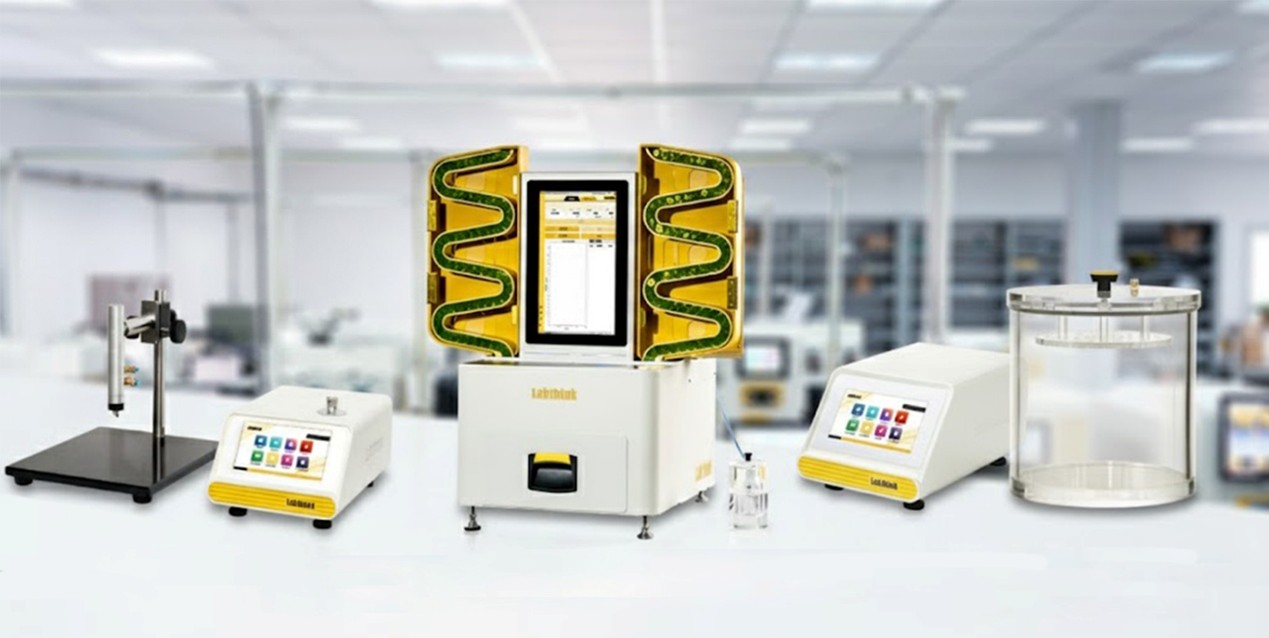
Labthink Solution: Labthink’s leak detection systems can identify compromised seals by testing the package’s ability to maintain a vacuum or withstand internal pressure, ensuring that no micro-leaks occurred during the thermal contraction phase. |
Mechanical Robustness Testing
Evaluating the tensile strength and seal peel strength of flexible packaging is critical.
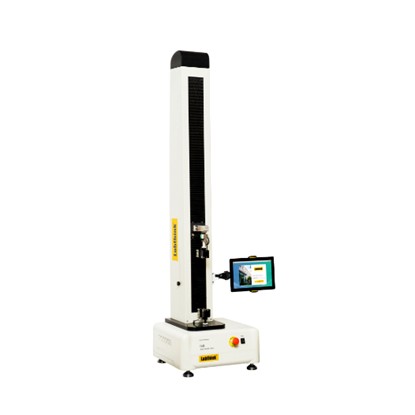
Labthink Solution: The C610 Series Tensile Testers can be used to measure the puncture resistance and tensile properties of cryo-materials after they have been conditioned at deep-cold temperatures, ensuring the film remains robust enough for handling. |
Barrier and Material Testing
Even in a frozen state, gas transmission can affect the stability of certain formulations.
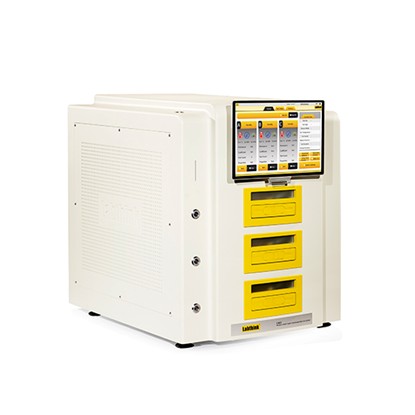
Labthink Solution: The PERMEATION Analysers allow researchers to evaluate how low-temperature cycling affects the barrier properties of films, ensuring that the material does not become porous after repeated freezing and thawing. |
Environmental and Transport Simulation
Combining low-temperature conditioning with mechanical stress testing (such as vibration or compression) simulates the rigors of global logistics. This ensures that the secondary and tertiary packaging provides adequate cushioning for the primary container.
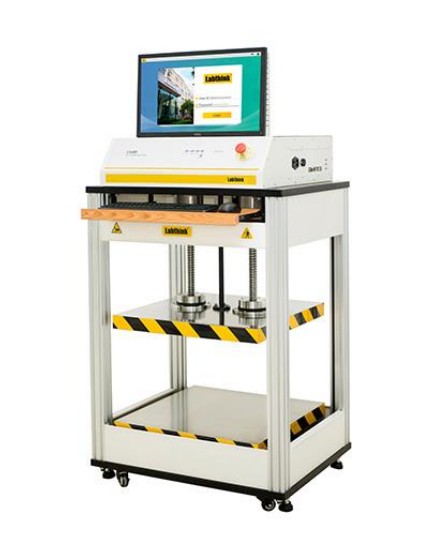
Labthink Solution: The Box Compression Tester is designed to evaluate the compressive strength and stacking performance of cartons and shipping containers. By simulating the vertical pressure and physical stresses of transit, this instrument ensures that the protective outer packaging remains structurally sound, preventing the collapse or deformation of internal vials or bags. |
Label and Printing Durability Checks
Testing the rub resistance of inks and the peel strength of adhesives after cryogenic exposure ensures that vital patient data remains legible.
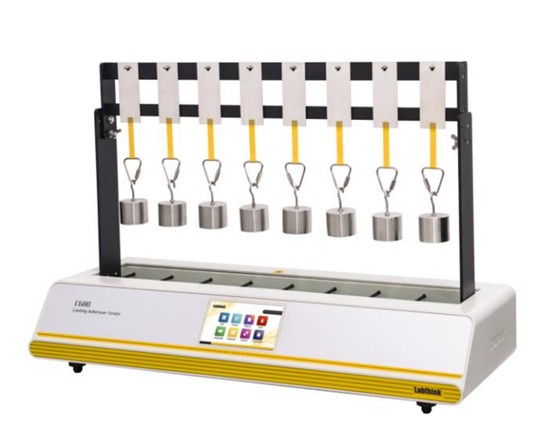
Labthink Solution: The CZY-8SA Lasting Adhesive Tester is specifically utilized to test the lasting adhesive properties (creep resistance) of labels and tapes. By measuring the endurance of the bond strength, manufacturers can ensure that vital patient data remains securely attached to the primary container throughout the storage and handling of cryogenic liquids and the subsequent thawing process. |
Practical Steps to Reduce Management Risk
Building a " Risk-Based Approach " to gene and cell therapy packaging transforms a reactive process into a proactive, data-driven strategy.
1. Process Mapping: Map the entire lifecycle, from fill and freeze to storage, shipping, and thawing. Identify " Transfer Zones " where the packaging faces the highest mechanical stress or rapid temperature fluctuations.
2. Design Worst-Case Test Matrices: Validate your packaging by exposing it to temperatures lower than required and for longer durations than expected. Follow this with rigorous CCI and mechanical testing to identify the exact point of failure.
3. Material Standardization: Where possible, standardize on high-performance polymers specifically rated for cryogenic use. This reduce the variability in test data and simplifies the regulatory filing process.
4. Data-Driven Handling Protocols: Use test results to define maximum " out-of-storage " hold times. If data shows a cryobag becomes 30% more prone to puncture after 5 minutes at room temperature, that data should inform the clinical handling SOPs.
Partnering with Labthink for Precision
Minimizing management risk in deep-cold logistics requires a departure from standard packaging assumptions. By focusing on the structural and mechanical integrity of materials through rigorous, traceable testing, companies can protect both their financial investment and, most importantly, patient safety.
Labthink is a global leader in providing high-end packaging testing instruments and services. We specialize in helping the pharmaceutical and medical device industries reach the highest standards of accuracy in barrier, integrity, and mechanical testing.
Contact us today for more packaging testing solutions for your projects.
Reference
[1] Sykes C. Time- and Temperature-Controlled Transport: Supply Chain Challenges and Solutions. P T.2018 Mar;43(3):154-170. PMID: 29491697; PMCID: PMC5821242.