
When consumers purchase a bottle of water, a yogurt cup, or a ready-to-eat meal, they rarely think about the packaging itself. Yet behind every food package lies a critical question:
Can substances from the packaging migrate into the food?
This question sits at the heart of food contact material (FCM) regulations worldwide and has become increasingly important as packaging structures grow more sophisticated and regulatory requirements continue to evolve.

Understanding Migration in Food Packaging
Plastic food packaging is far more than a simple polymer.
Modern packaging materials often contain a combination of:
- Monomers
- Additives
- Stabilizers
- Processing aids
- Plasticizers
- Antioxidants
- Colorants and coatings
These substances are used to improve performance, durability, appearance, and processing efficiency.
However, under certain conditions, some of these substances may transfer from the packaging into food. This phenomenon is known as migration.
Migration does not automatically imply a safety concern, but excessive migration can potentially:
- Alter food composition
- Affect taste and odor
- Increase consumer exposure to chemical substances
- Raise compliance and safety concerns
As a result, migration testing has become a fundamental component of food packaging safety assessment.
The European Union's Approach to Food Contact Plastics
Among global regulatory systems, the European Union has established one of the most comprehensive frameworks for food contact materials.
A cornerstone of this framework is:
Commission Regulation (EU) No. 10/2011 on Plastic Materials and Articles Intended to Come into Contact with Food
Often referred to as the Plastics Implementing Measure (PIM), this regulation provides harmonized requirements for plastic food contact materials across the EU.
Its objectives are straightforward:
Food contact materials must not transfer substances to food in quantities that could:
- Endanger human health
- Cause unacceptable changes in food composition
- Deteriorate sensory properties such as taste, smell, or appearance
The Positive List Concept
One of the key principles of EU 10/2011 is the use of a positive list.
Only authorized substances may be used in food contact plastics.
Today, the Union List includes approximately 1,100 approved monomers, additives, and related substances. Any substance not included on the list generally cannot be used in food contact plastic applications.
This approach provides manufacturers with a clear regulatory framework while ensuring a high level of consumer protection.

Overall Migration: Measuring the Total Transfer
A central requirement of the regulation is the assessment of Overall Migration (OM).
Overall migration represents the total quantity of non-volatile substances transferred from a food contact material into food or food simulants.
The EU Overall Migration Limit (OML) is:
10 mg/dm2 of food contact surface
or, in certain applications,
60 mg/kg of food.
Interestingly, the overall migration limit is not directly based on toxicological considerations. Instead, it serves as a practical risk management tool.
In simple terms, overall migration testing evaluates whether a material behaves as an appropriately inert packaging system and whether excessive amounts of unknown substances are being released.
Specific Migration: Focusing on Individual Chemicals
While overall migration provides a broad picture, some substances require closer scrutiny.
Certain monomers and additives have known toxicological profiles and therefore must comply with Specific Migration Limits (SMLs).
Examples include:
- Ethylene glycol
- Terephthalic acid
- Vinyl chloride
- Acrylonitrile
For these substances, laboratories must not only perform migration testing but also identify and quantify the specific chemicals present in the migration extract.
Unlike overall migration limits, SMLs are directly derived from toxicological risk assessments performed by the European Food Safety Authority (EFSA).
Why Migration Testing Has Become More Challenging
Modern food packaging is increasingly complex.
A single package may contain multiple layers of:
- PET
- PE
- PP
- PA
- EVOH
- Adhesives
- Inks
- Coatings
- Aluminum barriers
Each layer can contribute differently to migration behavior.
At the same time, food products themselves vary significantly in their extraction potential.
For this reason, EU regulations require testing with different food simulants, including:
- 10% ethanol
- 3% acetic acid
- 20% ethanol
- 50% ethanol
- Vegetable oil
- Modified polyphenylene oxide (MPPO/Tenax)
Temperature, contact time, and intended use conditions must also be considered.
As a result, migration testing is no longer a simple compliance exercise—it has become a sophisticated scientific evaluation of packaging performance under realistic use conditions.
The Growing Importance of NIAS
In recent years, regulatory attention has increasingly shifted toward NIAS (Non-Intentionally Added Substances).
These substances may originate from:
- Manufacturing impurities
- Reaction intermediates
- Degradation products
- Recycling processes
- Surface treatments
Unlike intentionally added substances, NIAS are often not explicitly listed in regulations, making their assessment significantly more challenging.
As food packaging technology advances, managing NIAS risk is expected to become an increasingly important part of food contact compliance strategies.
Reliable Testing Is the Foundation of Compliance
Whether evaluating overall migration, specific migration, or emerging NIAS concerns, one factor remains constant:
Reliable analytical data is essential.
Accurate migration testing helps manufacturers:
- Demonstrate regulatory compliance
- Support product development
- Reduce market-entry risks
- Strengthen customer confidence
- Improve quality assurance programs
As regulatory expectations continue to rise, laboratories are increasingly seeking automated, reproducible, and efficient testing solutions.
Supporting Food Contact Compliance with Advanced Migration Testing
To meet the growing demands of food contact testing laboratories, advanced migration testing systems are becoming indispensable tools.
The Labthink C840 Integrated Residue on Evaporation Testing System is designed to support overall migration and evaporative residue testing in accordance with international food contact regulations, including EU 10/2011 and related standards.
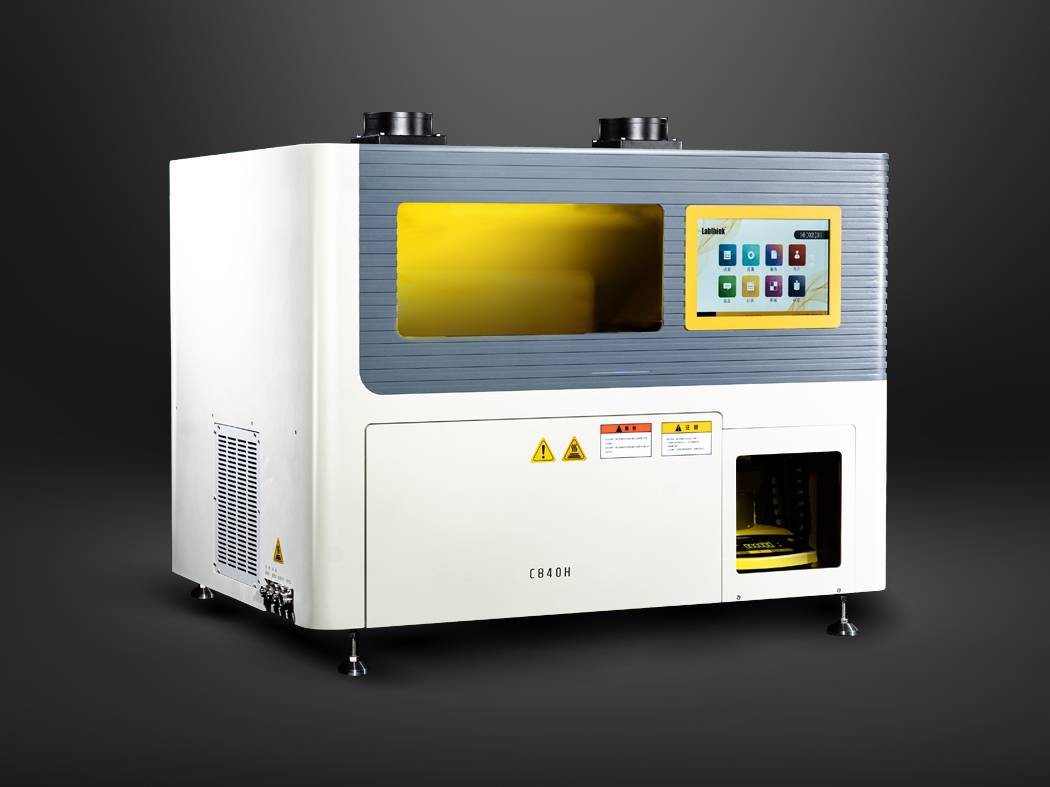
By automating the entire migration testing process, modern solutions help laboratories increase throughput, reduce labor requirements, and minimize operator-to-operator variability.
Automation also improves laboratory safety by reducing manual handling of chemical simulants, while ensuring consistent and reliable results for regulatory compliance.
The Labthink C840 Series is designed to support these goals, helping laboratories achieve higher efficiency, improved safety, and greater confidence in food contact testing.
As food packaging regulations continue to evolve, migration testing is no longer just about compliance—it is about building confidence in the safety and quality of products that reach consumers every day.