
In this article you will read:
- What is the difference between GTR and Permeance?
- Which unit or formula should be used?
- How to report the test results?
Understanding gas permeability metrics is critical for packaging design, material specification, and shelf-life prediction. However, overlapping definitions, varying regional standards, and unit conversions frequently lead to misinterpretation during international technical exchanges.
Understanding Core Permeability Parameters
Evaluating barrier properties relies on three distinct parameters. Understanding their mathematical and physical differences ensures correct data selection during quality control and material engineering.
- Gas Transmission Rate (GTR): The quantity of gas passing through a unit area of film per unit of time under specified test conditions. Expressed commonly as m3/(m2·24h), GTR reflects real-time performance under a specific partial pressure gradient.
- Permeance: The ratio of the Gas Transmission Rate to the partial pressure difference across the material (GTR/Δp) Expressed in units like cm3/(m2·24h ·0.1MPa ) or mol/(m2·s·Pa), permeance normalizes driving pressure, enabling direct performance comparisons of finished packaging specimens.
- Permeability Coefficient: The product of permeance and specimen thickness. Expressed in cm3·cm/(m2·s ·Pa ), this value represents an intrinsic property of the polymer itself, independent of geometric thickness.
Reconciling International Testing Standards
Testing methods dictate how these parameters are defined and reported across different regulatory regions.
Testing Method | Standard | Terminology Used | Metric Alignment & Equivalencies |
Differential Pressure Method (Manometric Sensor Method) | ASTM D1434 | GTR, Permeance, Permeability | Permeability Coefficient definitions align across ISO/GB. |
ISO 2556 | Gas Transmission Rate | equivalent in practice to ASTM/GB Permeance. | |
GB/T 1038 | Permeance, Permeability | Aligns directly with ISO 2556 conceptual definitions using pressure normalized to 0.1·MPa . | |
Equal Pressure Method (Coulometric Sensor Method) | ASTM D3985 | O2 GTR , Oxygen Permeance | Reports as cm3/(m2·d·atm); Standard benchmark for oxygen transmission in films and sheeting using sensor-based detection. |
ISO 15105-2 | O2 GTR, Oxygen Gas Permeability | GTR matches ASTM Oxygen Permeance. | |
GB/T 19789 | O2 GTR , O2, Permeability Coeff. | Modified adoption of ASTM D3985; standardizes units to cm3/(m2·24h ·0.1MPa ). |
Labthink VAC-V2 (EX) Gas Permeability Tester (Differential Pressure Method)
Designed based on the differential pressure(manometric) method (conforming to ASTM D1434 and ISO 15105-1), the VAC-V2 (EX) evaluates gas permeation by evacuating a lower-pressure chamber and introducing a constant pressure gradient across the test specimen. Because it measures pressure changes rather than relying on gas-specific sensors, it isa versatile, multi-gas solution capable of testing standard gases (N2, CO2, O2,He) as well as flammable, explosive, or toxic gases like hydrogen (H2).Equipped with a TUV-certified split control system and a self-regulating liquid circulation temperature controller ranging from 5°C to 95°C (±0.1°C), it simultaneously determines gas transmission rates, permeability coefficients, diffusion coefficients, and solubility coefficients across three independent test cells.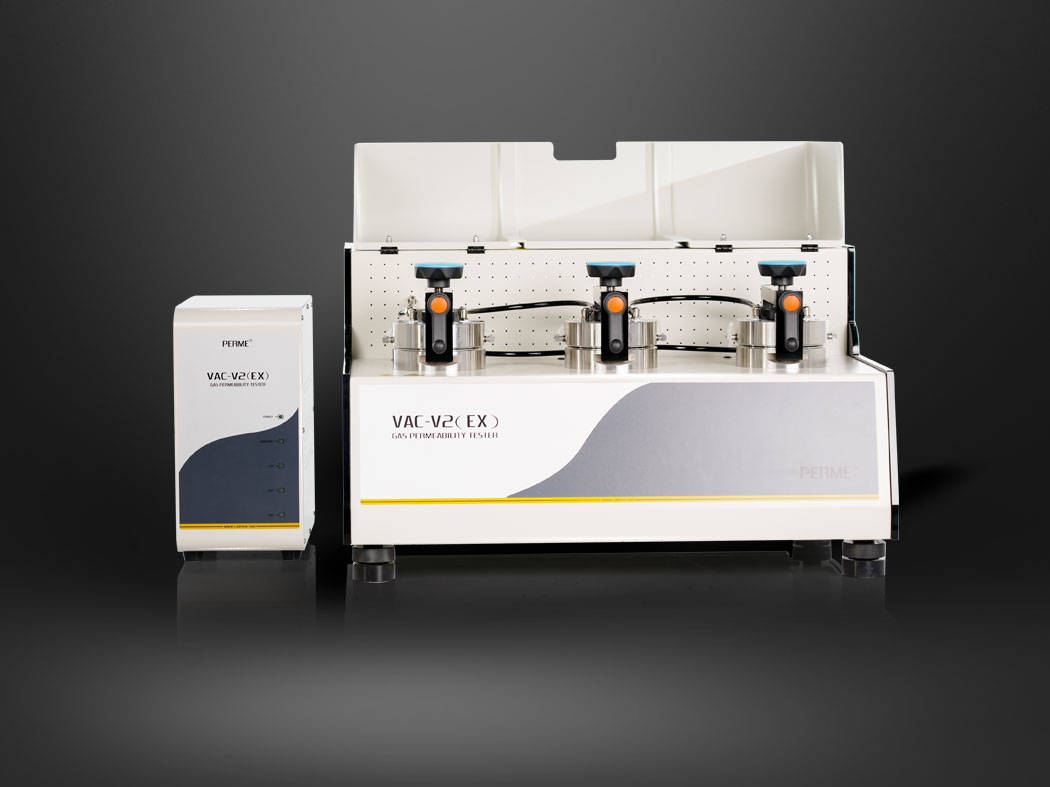
Labthink C203H Oxygen Transmission Rate Tester (Equal Pressure / Coulometric Sensor Method)
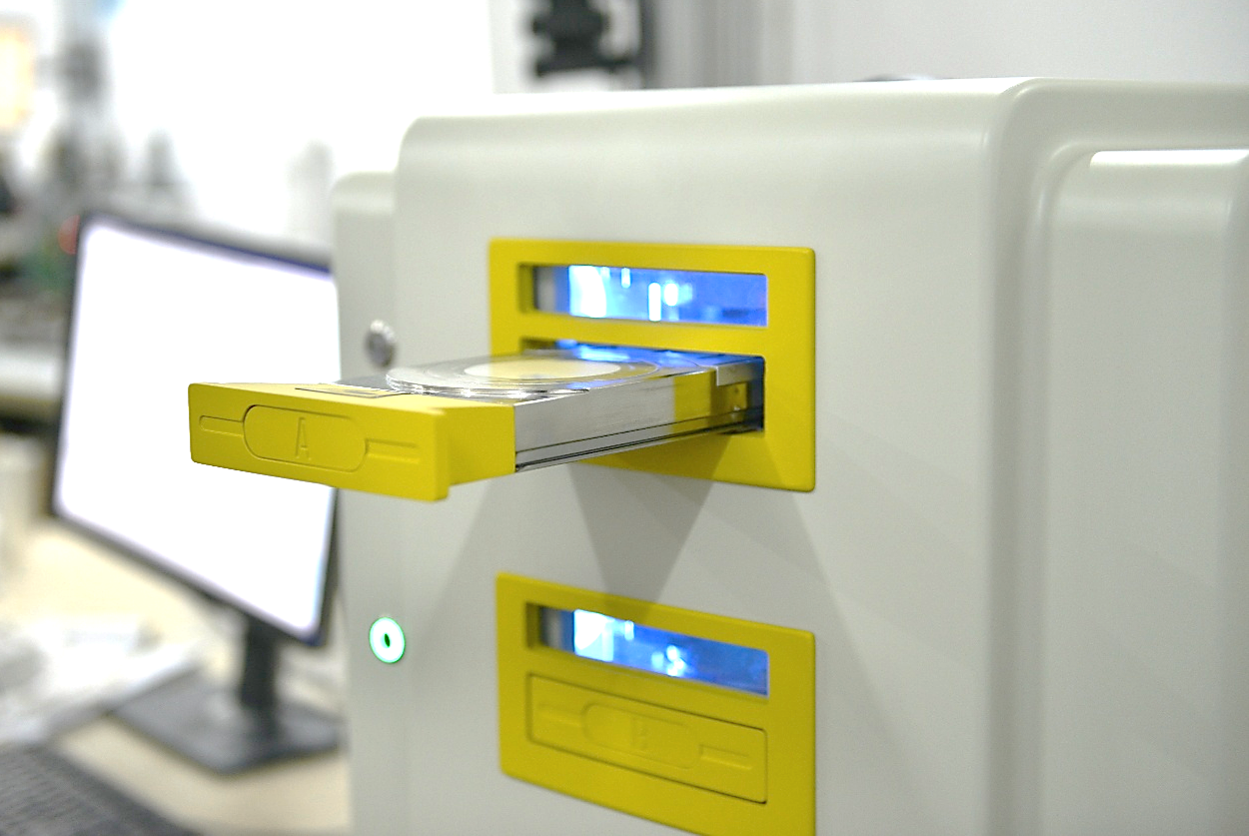
Operating on the equal pressure method paired with a high-sensitivity coulometric oxygen sensor (conforming to ASTMD3985 and ISO 15105-2), the C203H is purpose-built for high-precision oxygen permeability testing of medium- and high-barrier films, sheets, and whole packages. During testing, oxygen or airflows on one side of the sample while oxygen-free nitrogen carrier gas flows at equal pressure on the opposite side, transporting permeated oxygen molecules directly to the ppb-level coulometric sensor for absolute-value detection without calibration. Featuring 360° air-circulation temperature control(standard 15°C to 50°C, customizable to 5°C–60°C with ±0.05°C stability),automated relative humidity control, and three independent drawer-type test cells, it delivers ultra-low detection limits and rapid, automated OTR analysis.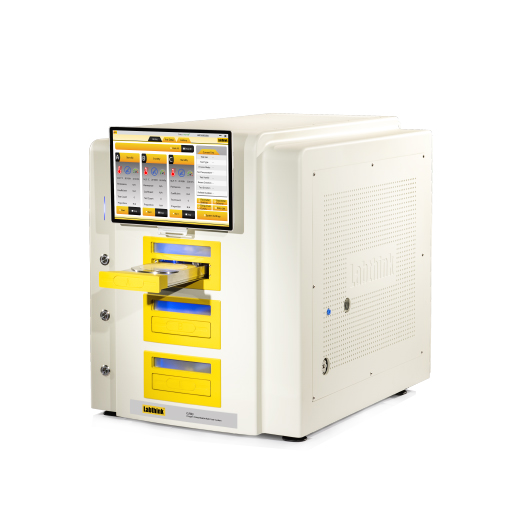
Practical Application: Selecting theRight Parameter
Choosing the correct parameter depends directly on material construction:
- Finished Laminates & Multi-Layer Films: Specify Permeance or Transmission Rate. Composite films (e.g., PET/AL/PE) lack homogeneous thickness, making Permeability Coefficient calculations mathematically invalid.
- Raw Polymer Resins & Monolayers: Use the Permeability Coefficient to compare material performance or model thickness variations during R&D design.