Bridging Material Science, Packaging Integrity, and EU Regulations
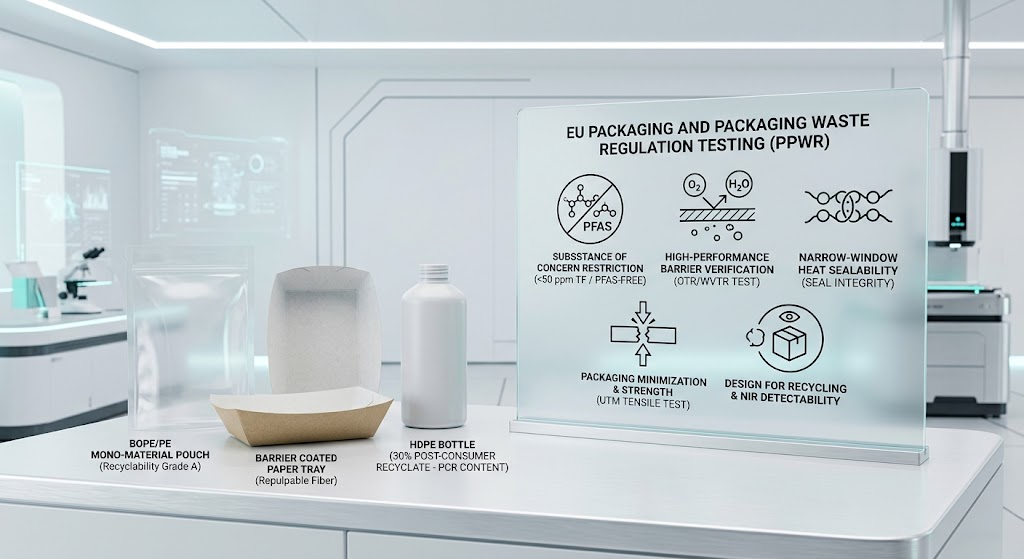
The EU Packaging and Packaging Waste Regulation (PPWR) fundamentally transforms packaging design from a linear model focused purely on product protection and cost to a circular lifecycle model. To navigate strict mandates surrounding Design for Recycling (DfR), mandatory Post-Consumer Recycled (PCR) content thresholds, packaging minimization, chemical safety, and structural integrity, manufacturers must implement rigorous material characterization protocols across every stage of development. By systematically combining chemical migration screening, gas and moisture permeability testing, high-speed mechanical profiling, thermal seal window analysis, and non-destructive container closure integrity testing (CCIT), Labthink's portfolio of precision testing instruments provides the empirical data required to validate compliant, high-performance packaging without compromising product shelf-life or processing efficiency.

1. Chemical Safety, Migration &Volatiles Testing
PPWR enforces strict limits on hazardous substances, notably banning or capping PFAS in food-contact packaging, alongside capping heavy metals to a combined maximum of 100 ppm. Furthermore, the incorporation of PCR resins introduces potential volatile contaminants and non-volatile extractables that must be quantified.
- Non-Volatile Matter & Migration Testing: Recycled polymers and coated structures must not release harmful non-volatile chemical residues or excess migratory compounds into food simulant media. This compliance is evaluated through the gravimetric determination of Residue on Evaporation (ROE) and Overall Migration, strictly adhering to EN 1186 and EU Regulation No. 10/2011 testing standards.
- Volatile Content & Moisture Analysis: The objective of PPWR regarding structural integrity during re-extrusion is to determine the moisture levels and volatile organic compounds (VOCs) in raw post-consumer recycled (PCR) pellets, thereby preventing common defects like voids, bubbles, and overall material degradation. This quality control process is carried out using the Loss on Drying (LOD) testing method, strictly adhering to standard guidelines like USP <731> and ASTM E1868.
2. Barrier Performance &Mono-Material / PCR Optimization
Transitioning from multi-material laminates(e.g., PET/PE, Paper/PE/AL) to recyclable mono-materials (e.g., BOPE/PE,PP/MDO-PP) or incorporating high-PCR percentages often degrades gas and moisture barrier properties. Precise permeability characterization ensures shelf-life integrity without over-packaging.
- Oxygen Transmission Rate (OTR): Measures oxygen permeation through downgauged mono-material barrier films and PCR-blended substrates using the Coulometric sensor method (ASTM D3985, ISO 15105-2, or DIN 53380-3) to prevent product oxidation.
- Water Vapor Transmission Rate (WVTR): Evaluates the moisture barrier capacity of recyclable polyolefin films and functional paper coatings via Modulated Infrared Sensor testing (ASTM F1249, ISO 15106-2) or Gravimetric analysis (ASTM E96).
- Gas Permeability & Environmental Safety: Characterizes the general permeability of carbon dioxide (CO2), nitrogen (N2), oxygen (O2), , and hazardous gases in industrial or modified atmosphere packaging (MAP) using Differential Pressure and Manometric methods (ASTM D1434, ISO 15105-1).
3. Packaging Minimization &Structural Mechanical Testing
PPWR mandates that packaging volume and weight be reduced to the minimum necessary to ensure safety and functionality, while capping empty space ratios at . Material characterization must ensure that lightweighted, thin-gauge films retain adequate mechanical strength during high-speed handling and transport.
Under the PPWR mandate for packaging minimization, downgauging flexible films and corrugated containers requires a rigorous mechanical evaluation to ensure structural integrity is preserved.
- Tensile strength and elongation testing per ASTM D882 or ISO 527-3 quantifies the yield strength, elastic modulus, and elongation losses introduced by PCR resin integration.
- To evaluate barrier degradation and pinhole formation after repeated handling, subjects mono-material structures to severe mechanical flexing in accordance with ASTM F392.
- On high-speed automated Form-Fill-Seal (FFS) packaging lines, consistent slip performance is verified by measuring coefficient of friction per ASTM D1894 and ISO 8295.
- Thin-gauge barriers must also resist sharp-edge impacts during distribution, which is validated through pendulum tear and puncture testing (ASTM D1922 and ASTM F1306). Finally, to ensure lightweighted shipping containers retain sufficient top-load resistance during warehouse stacking, measures top-load compressive strength and deformation limits in compliance with ASTM D642 and ISO 12048.
4. Thermal Characterization &Narrow-Window Seal ability
Mono-materials and PCR-rich formulations exhibit broader melting ranges, variable crystallization behaviors, and narrower heat-sealing temperature windows compared to virgin multi-layer materials. Precise characterization prevents seal failure on automated production lines.
- To ensure reliable packaging integrity during high-speed production within PPWR guidelines, the primary objective is to map heat sealability and process windows, determining the exact dwell time, pressure, and temperature needed to form hermetic seals on mono-material PE or PP films without burning through the outer layer, evaluated via heat seal strength testing per ASTM F88 and ASTM F2029.
- Evaluating Hot Tack performance measures the seal strength immediately after sealing while the polymer is still molten—a critical factor for vertical form-fill-seal (VFFS) machinery—using Hot Tack strength testing in accordance with ASTM F1921.
5. Package Integrity &Non-Destructive Leak Testing (CCIT)
Under PPWR, packaging must maintain absolute integrity throughout its lifecycle without relying on over-engineered, non-recyclable thick seal layers. Container Closure Integrity Testing (CCIT)verifies that lightweight seals prevent microbial ingress and product leakage.
- Deterministic Non-Destructive Leak Testing: Detect micro-leaks in flexible pouches, rigid trays, and pharmaceutical/food packaging without destroying the package sample in accordance with ASTM F2338 Vacuum Decay method.
- Gross Leak & Seal Burst Testing: Measure seal rupture resistance and burst pressure limits under internal pressure buildup during transport or air freight per ASTM F2054 (Restrained Plate Burst), ASTM D3078 (Bubble Emission).
6. Labthink Solution
- Chemical Safety
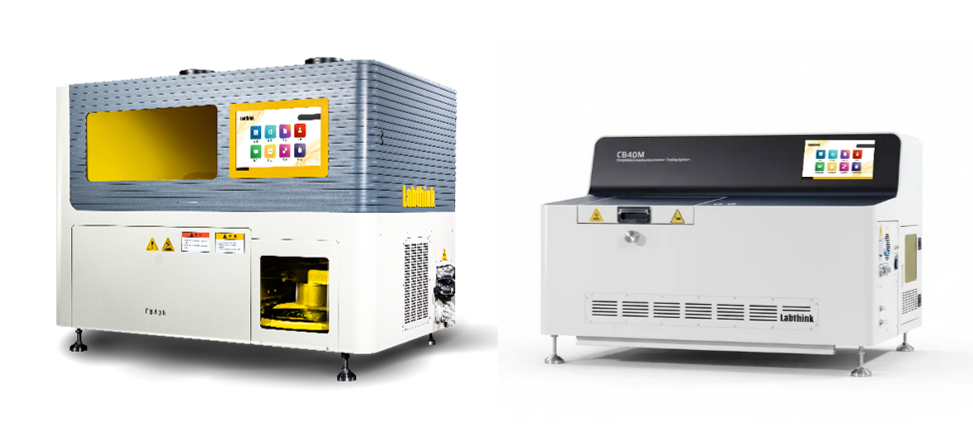
- Labthink C840 Integrated Residue on Evaporation Testing System (delivers automated extraction, evaporation, and high-precision weighing to evaluate overall migration and ROE).
- Labthink C870 Loss on Drying (LOD) Analyzer (provides high-throughput, automated thermal drying and mass loss recording).
- Barrier Performance
- Labthink C403/ C406 Coulometric OTR & Infrared WVTR Test System (features multi-cell high-precision coulometric sensors with wide temperature and humidity control, at the same time delivers ultra-low detection limits for high-barrier flexible packaging).
- Labthink VAC-V2 Gas Permeability Analyzer utilizes the classic differential pressure method to test gas transmission rate and solubility coefficients.
- Structural Mechanical Testing
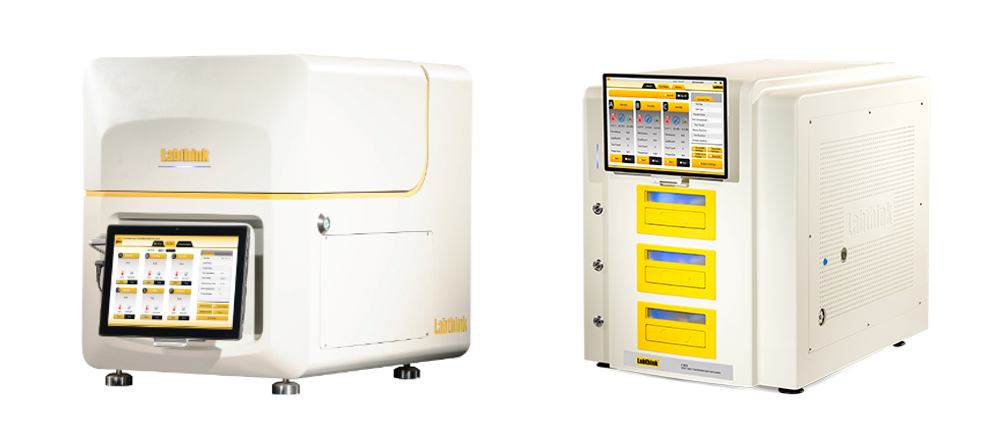
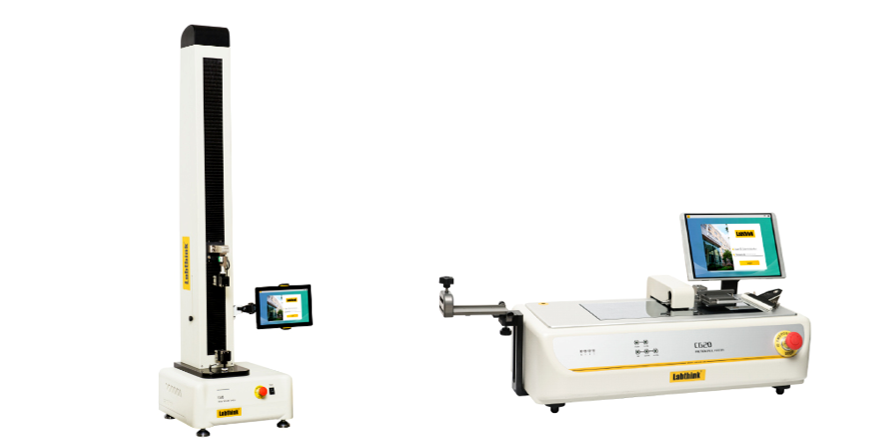
- Labthink XLW Series / C610H Auto Tensile Testers conforming with ASTM D882 or ISO 527-3 quantifies the yield strength, elastic modulus, and elongation losses introduced by PCR resin integration.
- To evaluate barrier degradation and pinhole formation after repeated handling, the Labthink FDT-02 Gelbo Flex Durability Tester subjects mono-material structures to severe mechanical flexing in accordance with ASTM F392.
- On high-speed automated Form-Fill-Seal (FFS) packaging lines, consistent slip performance is verified using the Labthink MXD-02 / C620M Static & Kinetic COF Tester to measure coefficient of friction per ASTM D1894 and ISO 8295.
- Thin-gauge barriers must also resist sharp-edge impacts during distribution, which is validated through pendulum tear and puncture testing (ASTM D1922 and ASTM F1306) utilizing the Labthink SLY-S1 Pendulum Tear Tester alongside universal testing machine (UTM) puncture fixtures.
- To ensure lightweighted shipping containers retain sufficient top-load resistance during warehouse stacking, the Labthink C611M Box Compression Tester (BCT) measures top-load compressive strength and deformation limits in compliance with ASTM D642 and ISO 12048.
- Labthink Instrument: Labthink C630H Precision Heat Seal Tester (features independently controlled top and bottom heating jaws with precision pressure calibration).
- Package Integrity
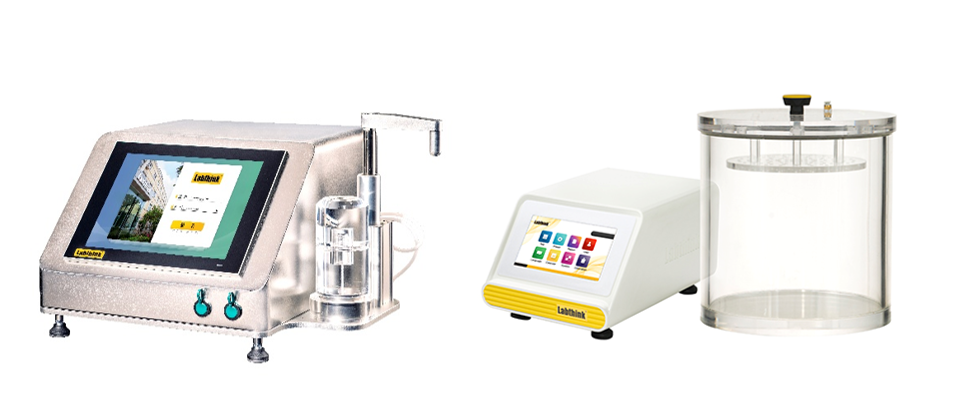
- Labthink C690 Series Container Closure Integrity Tester (utilizes high-precision vacuum decay technology to identify micron level package leaks).
- Labthink C660 Bubble Emission Leak Tester & Leak and Seal Strength Detector.