
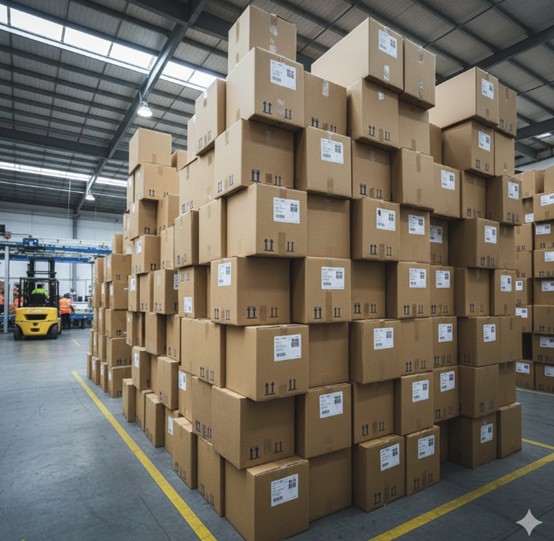
In the high-stakes world of logistics, the greatest threat to a product isn't always a dramatic accident; often, it is the silent, constant pressure of gravity. Stacking stress in warehouses and the vibration-induced settling during transit are the primary causes of packaging failure. When a bottom-tier box buckles, the entire stack can collapse, leading to damaged inventory, safety hazards, and significant financial loss. This is why the box compression test is a cornerstone of any robust quality control program.
(AI Generated Image)
Essential Standards: The Compliance Framework
To ensure that testing results are reliable and globally comparable, manufacturers must adhere to established international standards. These provide the " rules of engagement" for measuring the structural limits of a container.
- ASTM D642: This is the definitive test method for determining the compressive resistance of shipping containers, whether they are individual components or full unit loads.
- ISO 12048: These international requirements specify the use of a compression tester to evaluate packaging under both crushing and stacking scenarios.
- TAPPI T804: This standard offers specific protocols for fiberboard shipping containers, focusing on the unique behavior of corrugated materials.
- Why Standards Matter: Adherence to these protocols ensures your data is "auditable." It serves as a technical passport, proving to global retail partners like Amazon or Walmart that your packaging can survive their rigorous distribution networks.
Step-by-Step: How to Perform the Compression Test
Executing a carton compression testrequires precision to ensure that the data reflects the box's true strength rather than an error in setup.
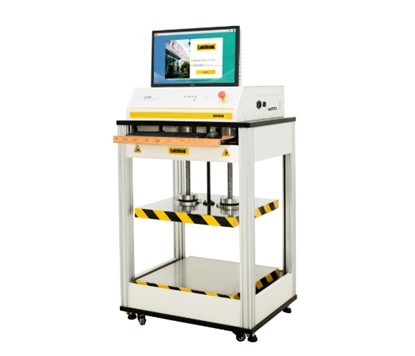
- Step 1: Instrument Setup: Calibrate a professional-grade compression tester, such as the Labthink C611M. Ensure the compression platens are clean, debris-free, and perfectly parallel to prevent localized stress points.
- Step 2: Sample Placement: Center the box precisely on the lower platen. Misalignment creates uneven load distribution, leading to "false low" readings that don't represent the material's actual capacity.
- Step 3: Defining Test Modes:
- Crush Test: The machine applies increasing force until the box physically collapses, identifying the ultimate peak load.
- Stack Test (Load & Hold): The machine applies a predetermined constant load and holds it for a set duration (e.g., 24 to 72 hours) to simulate long-term warehouse stacking.
- Step 4: Execution: Set the constant rate of travel. Per ASTM D642, this is typically 12.7 mm/min (0.5 in/min).
- Step 5: Data Capture: Utilize integrated software to generate a Load-Deflection curve, which visualizes how the box deforms under pressure before reaching its breaking point.
The Role of the Box Compression Test
The box compression test serves as the ultimate diagnostic tool for determining how much weight a container can handle before a stack becomes a hazard.
- Synergy in Testing: This test bridges the gap between theoretical material strength (the strength of the paper) and actual structural performance (the strength of the assembled box).
- Integrated Quality Control: A compression test accounts for all variables—including the direction of the flutes, the quality of the adhesive, and the impact of the printing process on the fiberboard. By determining the Stacking Strength, manufacturers can safely calculate how many layers of product can be piled in a warehouse without the bottom layer failing due to cumulative weight.
Conclusion
A successful packaging strategy requires a balance between material cost and structural safety. By utilizing rigorous compression testing, brands can optimize their material usage without risking catastrophic failure in the supply chain.
Labthink provides the essential technology to bridge this gap. With advanced instruments like the C611M Box Compression Tester, featuring high-precision load cells and intelligent data management, Labthink helps manufacturers meet global standards with ease.