
What is Loss on Drying (LOD)?
Loss on Drying (LOD) is a gravimetric analytical method used to determine moisture content and volatile substances in pharmaceutical substances, excipients, finished dosage forms, food materials, and chemical products.
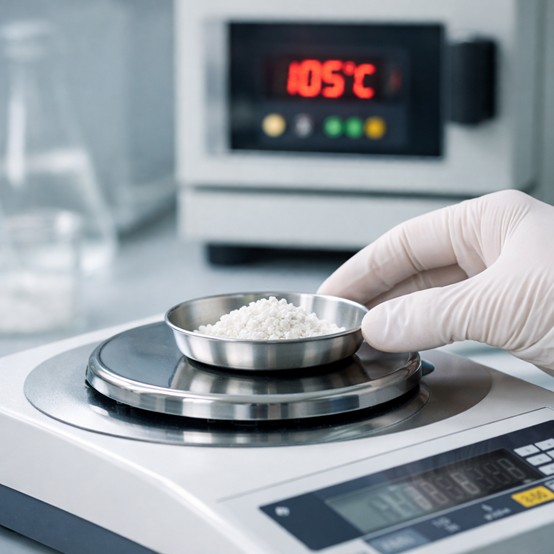
The loss on drying methodmeasures the weight reduction of a sample after drying under specified temperature conditions, typically 105°C unless otherwise defined in a monograph.
The standard LOD test procedure involves:
- Accurately weighing the sample
- Drying at a prescribed temperature
- Cooling under controlled conditions
- Reweighing until constant mass
- Calculating percentage weight loss
Because water and volatile matter directly affect product stability, potency, and shelf life, the loss on drying test remains a mandatory quality control parameter in regulated industries.
Loss on Drying in Pharmacopoeias
The loss on drying test is formally defined in major international pharmacopoeias:
- United States Pharmacopeia (USP <731> Loss on Drying)
- European Pharmacopoeia (Ph. Eur. 2.2.32)
- British Pharmacopoeia (Appendix IX D)
- Japanese Pharmacopoeia
- Chinese Pharmacopoeia (General Chapter 0831)
Although wording varies slightly, pharmacopoeial loss on drying requirements generally include:
- Drying to constant mass
- Specified temperature (commonly 105°C)
- Defined sample mass
- Use of appropriate weighing precision
- Controlled environmental conditions
Compliance with pharmacopoeia loss on drying chapters is essential for pharmaceutical manufacturers and contract testing laboratories.
Loss on Drying vs Moisture Content
Many users searching for “loss on drying” are comparing it with other moisture determination methods such as Karl Fischer titration.
The key difference:
- Loss on Drying (LOD) measures total weight loss, including water and volatile substances.
- Karl Fischer specifically measures water content only.
For materials where volatile solvents or residual organics may be present, the LOD method provides broader mass loss evaluation.
Therefore, LOD testing remains widely used in pharmacopoeial monographs and raw material specifications.
(AI Generated)
Challenges of the Traditional Loss on Drying Method
In many QC laboratories, the loss on drying test is still performed using a drying oven and an analytical balance.
While compliant with pharmacopoeia requirements, this manual LOD workflow may introduce variability:
Temperature Impact on Weighing
Removing samples from a 105°C oven and placing them on an analytical balance may affect stability due to temperature gradients.
Operator-Dependent Variability
Differences in cooling time, handling technique, and environmental exposure can influence repeatability.
Increasing Regulatory Expectations
Modern pharmaceutical laboratories must comply with:
- 21 CFR Part 11
- GMP data integrity requirements
Manual recording and decentralized systems may increase compliance risk.
As regulatory oversight strengthens, laboratories are reviewing their LOD testing workflows.
Automated Loss on Drying Tester: A Modern Solution
An automated loss on drying tester integrates drying, cooling, and weighing into a standardized system while maintaining the classical gravimetric principle defined by pharmacopoeias.
Key features of an advanced automated LOD system typically include:
- Independent drying and weighing chambers
- Automated sample transfer
- Controlled cooling before weighing
- High-precision analytical balance (0.01 mg or 0.1 mg resolution)
- Temperature fluctuation control (e.g., ±0.5°C)
- Electronic data management
For example, the C870 Automated Loss on Drying System developed by Labthink integrates:
- Fully separated drying and weighing modules
- Robotic cup handling (12 or 36 test positions)
- Automated drying–cooling–weighing cycle
- Multi-level user access control
- Optional 21 CFR Part 11 compliance
Such systems do not alter the pharmacopoeial loss on drying method; instead, they standardize its execution and reduce human variability.
How to Choose a Loss on Drying Tester
When selecting a loss on drying tester for pharmaceutical or chemical laboratories, consider:
1. Balance Precision
- 0.01 mg resolution for high-precision applications
- Verified repeatability performance
2. Thermal Stability
- Separation of drying and weighing
- Stable temperature control up to 130°C
3.Automation Level
- Automated sample movement
- Multi-station capability
- Reduced operator intervention
4.Compliance Readiness
- Audit trail
- Electronic signature
- Role-based user management
- Network connectivity
Choosing a compliant and automated loss on drying system can improve reproducibility, throughput, and inspection readiness.
Industries Using Loss on Drying Testing
The loss on drying method is widely applied in:
Pharmaceutical Industry
- Active pharmaceutical ingredients (API)
- Excipients
- Finished dosage forms
Food Industry
- Moisture analysis of raw materials
- Regulatory food testing (e.g., GB 5009.3)
Chemical Industry
- Organic and inorganic materials
- Industrial intermediates
- Moisture and volatile content evaluation
Because the LOD test is referenced in both pharmacopoeias and industrial standards, it remains a globally accepted method.
Why Laboratories Are Upgrading Their LOD Testing
Search trends show increasing interest in:
- Automated loss on drying tester
- GMP compliant LOD system
- Pharmacopoeia loss on drying equipment
- 21 CFR Part 11 LOD instrument
This reflects a shift from purely manual LOD execution toward standardized and automated solutions.
While the scientific principle of loss on drying remains unchanged, laboratory expectations regarding precision, safety, and compliance continue to evolve.
Learn More About Automated Loss on Drying Systems
If your laboratory is reviewing its current loss on drying method or preparing for regulatory audit, evaluating an automated LOD tester may help improve:
- Measurement consistency
- Operational efficiency
- Data integrity
- Compliance readiness
Labthink provides technical documentation, application consultation, and demonstration support for laboratories upgrading their loss on drying testing systems.