
For modern food packaging manufacturers, the landscape has shifted from a focus on shelf-life and aesthetics to surviving a regulatory minefield. The industry is currently grappling with a dual challenge: adhering to increasingly complex global safety standards while rapidly phasing out legacy materials, like Bisphenol A (BPA), in favor of safer alternatives.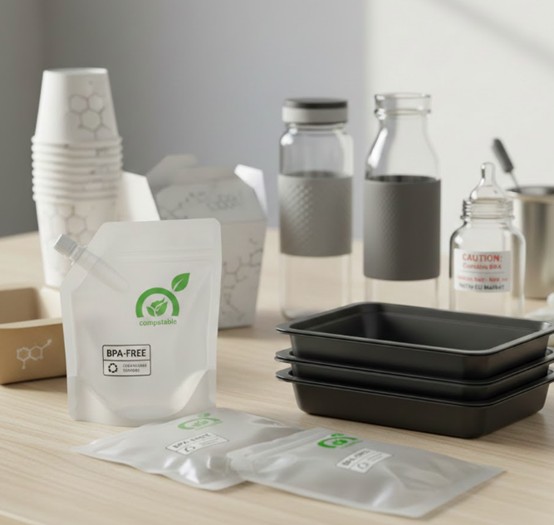
Section 1: The 2026 Regulatory Landscape (EU & FDA)
Navigating international trade requires understanding fundamentally philosophies regarding food contact materials (FCMs).
1. The Precautionary Principle vs. Risk-Based Management
- EU (Precautionary Principle): The European Union operates on the basis that if an action or policy has a suspected risk of causing harm, the burden of proof that it is not harmful falls on those taking the action. This leads to swifter, blanket bans on specific chemicals.
- FDA (Risk-Based): The United States FDA traditionally focuses on "safe use" levels, evaluating the actual exposure risk to consumers. However, this gap is narrowing as US state and federal pressures increase.
2. Key 2026 Updates
- The EU BPA Ban: Regulation (EU) 2024/3190 is now in full effect. Following the January 2025 ban, we are approaching the critical July 20, 2026 transition deadline. This is the final date for marketing existing stocks of BPA-based materials; after this, the presence of BPA in most food contact applications becomes a compliance violation.
- FDA Focus & the "GRAS" Loophole: In 2025 and early 2026, the FDA has faced intense pressure to close the "Generally Recognized as Safe" (GRAS) loophole, which previously allowed companies to self-certify chemicals. Under 21 CFR 175.300, there is now heightened scrutiny on PFAS and bisphenols, particularly in infant packaging and "sensitive use" categories.
- ASTM D6400 is the standard specification for labeling plastics designed to be aerobically composted in municipal or industrial facilities. As of early 2026, both the EU and several US states have tightened "Green Claim" directives. Manufacturers can no longer use an ASTM D6400 certificate to imply food safety. If a compostable cup leaches non-volatile matter above the OML limit, it is considered non-compliant, regardless of how quickly it degrades in a compost pile.
Section 2: Migration Testing
To prove compliance, manufacturers must move beyond theoretical safety and conduct physical testing.
1. Testing for Overall Migration (OM)
Under Regulation (EC) No 1935/2004, Overall Migration (OM) measures the total amount of non-volatile substances that transfer from a packaging material into a food simulant. Rather than identifying a specific chemical, OML serves as a benchmark for the inertness of the material. If a material exceeds the OM limit, it is considered unsuitable for food contact.
2. Precision Tools: The C840 Migration & Non-volatile-matter Content Tester
The increasing complexity of 2026 compliance—higher sample volumes and stricter limits—makes human-led processes more challenging. The Labthink C840H is a fully automated, integrated system designed to optimize the OM testing workflow.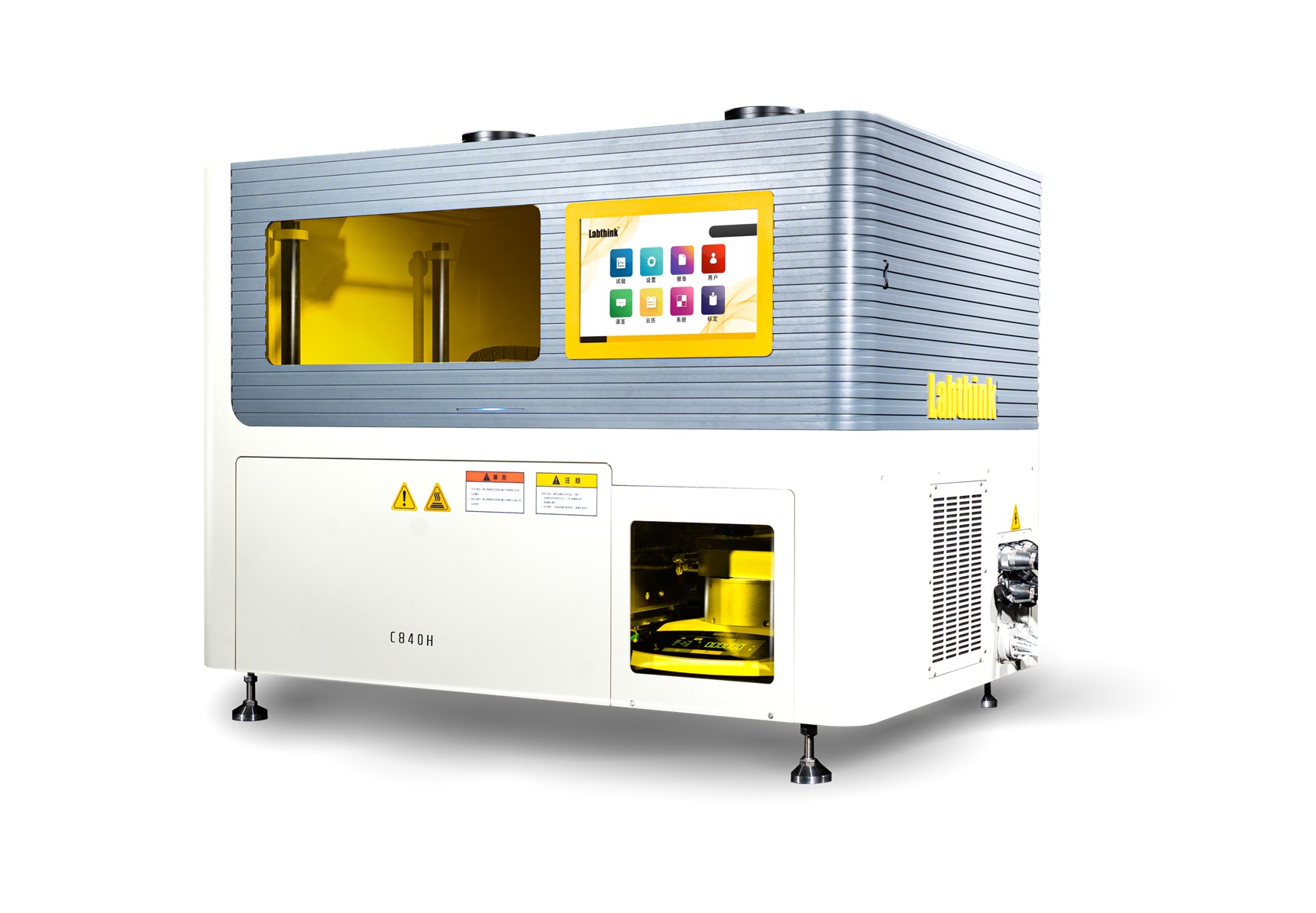
By automating the delicate stages of evaporation, drying, and weighing, the C840 offers several key advantages over traditional manual methods:
- Enhanced Safety: Reduces laboratory personnel exposure to solvent vapors and high-heat environments.
- Superior Accuracy: Eliminates the "human variable" in precision weighing, ensuring results remain consistent across different shifts and operators.
- Operational Efficiency: Dramatically increases throughput by allowing the system to run complex cycles autonomously, freeing up lab technicians for high-level data analysis.
Section 3: Compostable Materials Require More Migration Testing
When brands switch to biodegradable resins (like PLA or PBAT) to meet 2026 sustainability goals, they often introduce new, specialized additives—such as chain extenders, cross-linkers, and bio-based plasticizers—to mimic the performance of traditional plastics.
- The Migration Risk: These novel additives may be safe for soil (ASTM D6400), but they must still be proven safe for human consumption.
- The Link: Regulators in 2026 now require a " Dual-Compliance" approach. A product must pass ASTM D6400 to be sold as " compostable" and pass OML testing (per EU 10/2011 or FDA 21 CFR) to be sold as " food-contact safe."
Case Study – The BPA-Free Transition
The transition from Polycarbonate (PC)—which relies on BPA as a building block—to BPA-free alternatives is a prime example of the industry's agility.
- The Shift: Many brands have moved to Tritan? Copolyester or Polypropylene (PP) for reusable containers.
- The Challenge: These " BPA-Free " materials are not automatically safe. Manufacturers must still perform migration testing to ensure that the new additives (like stabilizers or clarifiers) do not migrate into the food at levels that violate the 2026 standards.
- The Result: Brands that proactively tested their new resins in 2025 are now successfully clearing the July 2026 "stock-out" deadline without supply chain disruptions.
Conclusion
The regulatory environment of 2026 demands more than just"compliance"; it demands traceable, repeatable data. As the EU and FDA converge on stricter chemical safety, the ability to accurately measure migration is the only way to ensure market access.
Labthink stands at the forefront of this transition, providing the global packaging industry with the automated testing instruments necessary to navigate these legislative shifts with confidence.