
In modern manufacturing and packaging, keeping moisture where it belongs—either inside or outside the package—is critical to product survival. Whether it's preventing potato chips from losing their crunch, stopping pharmaceutical tablets from degrading, or protecting delicate electronics from corrosion, moisture control depends on barrier performance.
At the center of evaluating these barrier materials is Water Vapor Transmission Rate (WVTR) testing.
What is Water Vapor Transmission Rate (WVTR)?
Water Vapor Transmission Rate measures the mass of water vapor that passes through a unit area of a material per unit of time under specified conditions of temperature and humidity. It quantifies how effective a thin film, foil, or polymer barrier is at blocking water vapor.
WVTR is typically expressed in metric units as g/m2·day or imperial units as g/100in2/·day. The lower the WVTR value, the better the material acts as a barrier to moisture.
Why Is WVTR Testing Essential?
- Food Packaging: Moisture ingress leads to sogginess, mold growth, and premature spoilage, while moisture loss can dry out fresh products.
- Pharmaceuticals: Many active drug compounds degrade rapidly when exposed to humidity, requiring high-barrier blister packs or foil pouches.
- Electronics & Displays: Advanced components like OLED screens and solar cells are sensitive to trace amounts of moisture that cause micro-corrosion.
- Textiles: In performance apparel, outdoor gear requires low moisture permeability from the outside (waterproofing) while maintaining breathability from the inside.
Primary Testing Methods
Industry standards—such as ASTM E96,ASTM F1249, and ISO 15106—outline two main primary testing approaches, along with specialized detection technologies:
1. The Gravimetric Method (Weight Loss /Gain)
Often called the "cup method" (ASTME96 / ISO 15106-1), this is the classic absolute reference method.The specimen is sealed over a dish containing either distilled water (Water Method) or a desiccant (Desiccant Method).
- How it works: The test assembly is placed in a climate chamber with controlled temperature and relative humidity. Over time, moisture diffuses across the film, and the test cup is weighed at regular intervals using a high-precision analytical balance.
- Calculation:
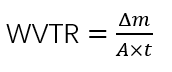
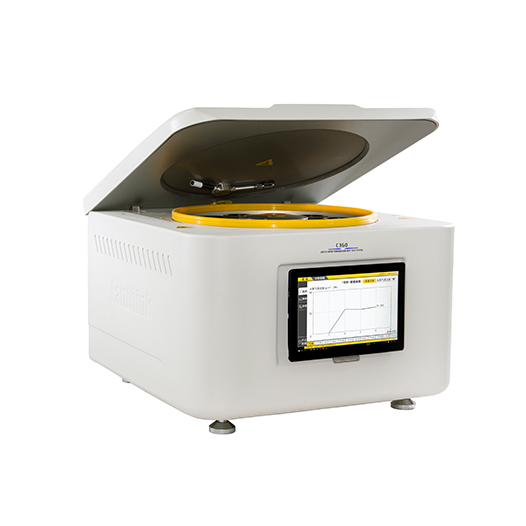
The Labthink C360H Water Vapor Transmission Rate Tester is an automated, gravimetric Water Vapor Transmission Rate (WVTR) tester compliant with ASTM E96 and ISO2528. Featuring 12 test stations, a patented test chamber, a high-accuracy balance, it precisely regulates temperature, humidity, and airflow to measure moisture permeability in plastic films, foils, paper, textiles, and pharmaceutical or food packaging.
2. The Infrared (IR) Sensor Method
The infrared method (ASTM F1249 / ISO15106-2) offers a fast, highly automated alternative to physical weighing.
- How it works: The sample film is mounted between two chambers—one containing a regulated moisture source and the other swept by a dry carrier gas. As water vapor diffuses across the film into the dry chamber, an integrated infrared sensor measures spectral absorption at water-specific wavelengths to calculate the transmission rate in real time.
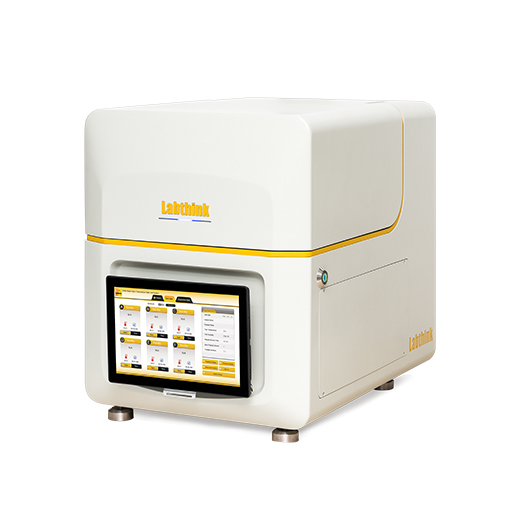
The Labthink C306H Water Vapor Transmission Rate Test System uses a patented infrared sensor to measure the moisture barrier properties of films, foils, and packaging materials in compliance with ASTM F1249 and ISO 15106-2. Built with six independent test cells, automated clamping, and 360° air-circulation temperature control, it tests six specimens simultaneously across a wide range (0.02–40 g/(m2·day) standard, up to 2,000 g/(m2·day) with optional masks) via an intuitive 12-inch Windows 11 touchscreen.
3. The Electrolytic Sensor Method
For specialized or ultra-low barrier testing, an electrolytic sensor measures changes in electrical conductivity as water molecules migrate across the film, offering high sensitivity for barrier materials.
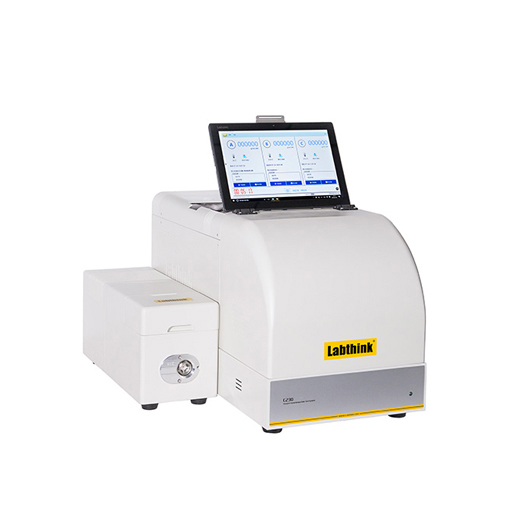
Labthink C330M Water Vapor Transmission Rate Test System is designed and manufactured based on electrolytic sensor method and conforms to the requirements of ISO 15106-3.
Gravimetric Method vs. Infrared Sensor Method: How To Choose?
While the Infrared Sensor Method is faster and more sensitive, the Gravimetric (Cup) Method remains a fundamental standard. Neither method is strictly "better"—each serves distinct material types, sensitivity requirements, and testing goals.
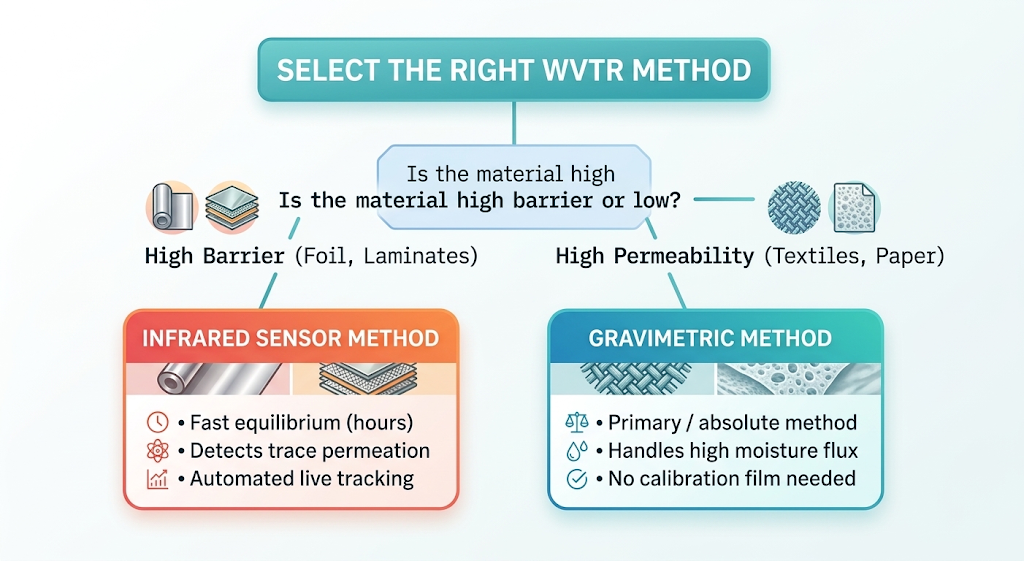
Method Advantages & Application Matrix
Feature / Scenario | Gravimetric (Cup) Method | Infrared (IR) Sensor Method |
Primary Advantage | Requires no calibration films; lower instrument cost. | Provides rapid test results and detects trace permeation. |
Best Applicable Materials | Medium-to-high permeability materials: breathable textiles, non-wovens, paperboard, building films. | High-barrier structures: metallized films, aluminum foils, pharma blister packs, multi-layer food laminates. |
Sensor Saturation Risk | Handles high vapor throughput without risk of over-ranging sensors. | High vapor flux can saturate delicate sensors outside their range. |
Testing Speed | Days to weeks. | Hours to 1–2 days. |
Testing Flexibility | Supports both wet-cup (water) and dry-cup (desiccant) methods. | Flow-through chamber design optimized for relative humidity gradients. |
Key Variables That Impact WVTR Results
Regardless of the method chosen, environmental and material factors must be strictly controlled:
- Temperature: Higher temperatures increase thermal energy and diffusion rates across polymer matrices, leading to higher WVTR values.
- Relative Humidity (RH) Gradient: A greater difference in moisture levels between both sides of the film accelerates vapor flow.
- Film Thickness: Thicker films present a longer diffusion pathway, generally yielding lower WVTR numbers.
- Polymer Structure: Materials like polyethylene (PE) and polyethylene terephthalate (PET) offer different natural barrier characteristics based on their molecular arrangement and crystallinity.
Conclusion
Measuring Water Vapor Transmission Rate is a foundational step in quality control, material selection, and shelf-life prediction. High-barrier packaging materials benefit from the rapid speed and low limits of detection offered by Infrared Sensor Method instruments,while breathable textiles and reference standard evaluations rely on the time-tested accuracy of the Gravimetric Method. Understanding these trade-offs ensures manufacturers select the right instrument for their specific material needs.