
In industrial and commercial flooring, epoxy moisture barriers are critical for protecting high-value installations from the structural and aesthetic damage caused by vapor transmission. Utilizing high-precision testing, such as the gravimetric method, ensures that high barrier films and coatings meet the rigorous demands of moisture barrier packaging and construction standards.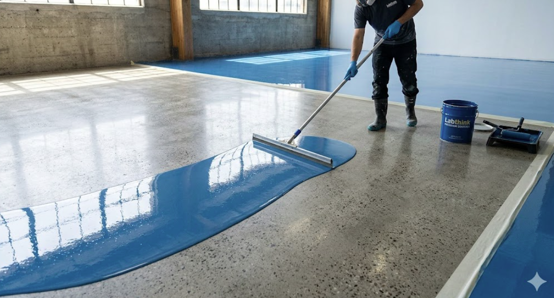
Why is Moisture Barrier Testing Applied?
Testing is essential because concrete, even when fully cured, remains a porous material that can trap and release water vapor. When an impermeable epoxy coating is applied, this trapped moisture creates hydrostatic pressure.
Without a verified moisture barrier, this pressure leads to:
- Adhesive Failure: The bond between the epoxy and concrete weakens, causing the floor to peel.
- Surface Defects: Trapped gas causes unsightly bubbling, blistering, or cracking.
How is the Test Implemented?
Moisture barrier testing for epoxy typically involves measuring the WaterVapor Transmission Rate (WVTR)—the amount of vapor passing through a specific area of the material over time.
Test Method and Process
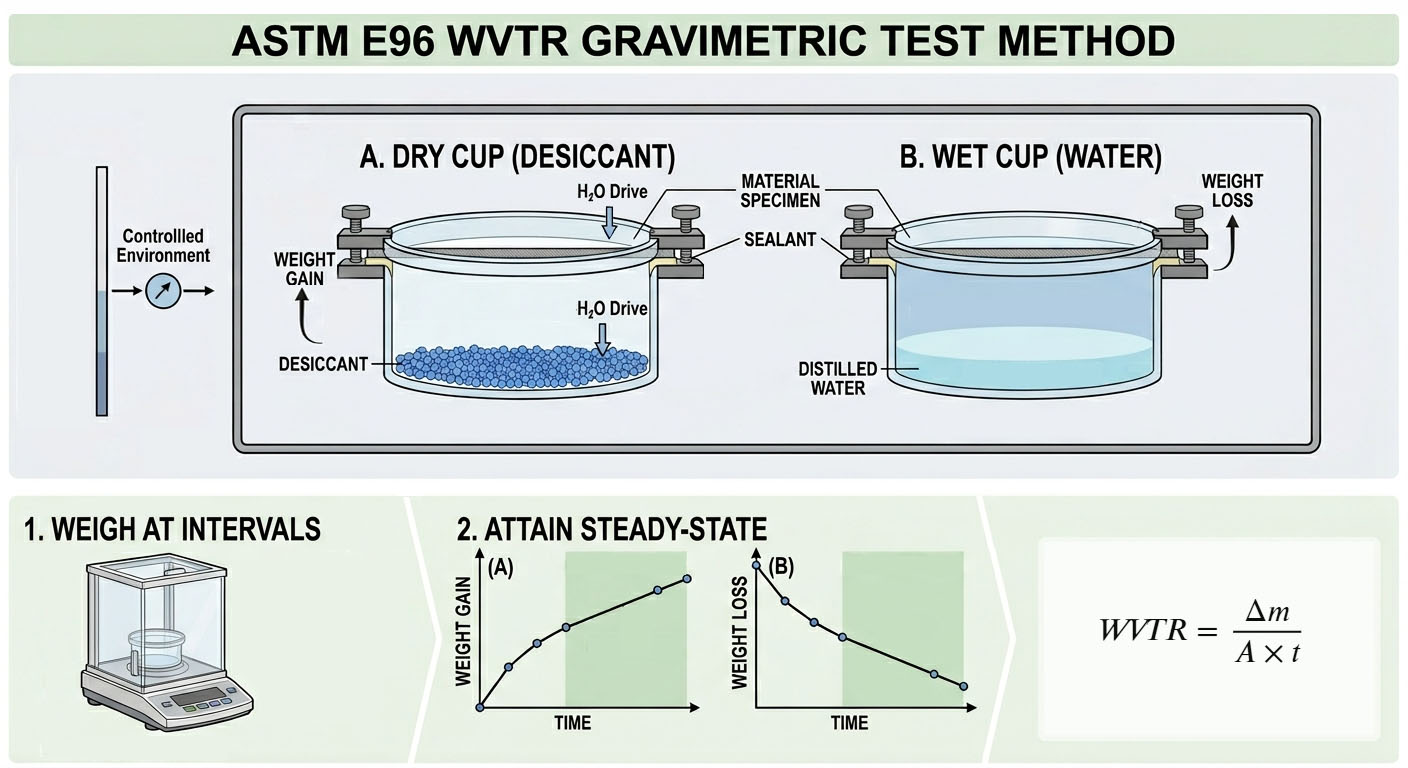
The coating (epoxy) is either tested as a "free film" or applied to a standardized porous substrate. The specimen is sealed over a test dish (cup) containing either a desiccant or distilled water. The assembly is placed in a chamber with strictly controlled temperature and humidity, creating a vapor pressure gradient. Using the gravimetric method, the dish is weighed at precise intervals. The change in mass(weight gain for desiccant or loss for water) determines the moisture permeance.
Standards for Epoxy Moisture Barriers
The industry relies on two primary ASTM standards for validating barrier performance:
- ASTM E96: The foundational "Cup Method" for sheet materials and building envelopes. It is the widely accepted standard for determining the WVTR of moisture barrier packaging and construction membranes.
- ASTM D1653: Specifically designed for organic coatings like epoxy, paint, and lacquer. It provides directions for preparing free films and is the go-to standard for evaluating the moisture barrier properties of floor coatings.
Labthink Water Vapor Permeability Tester: Gravimetric Method
For manufacturers requiring extreme accuracy, Labthink offers advanced solutions like the C360H Water Vapor Transmission Rate Test System.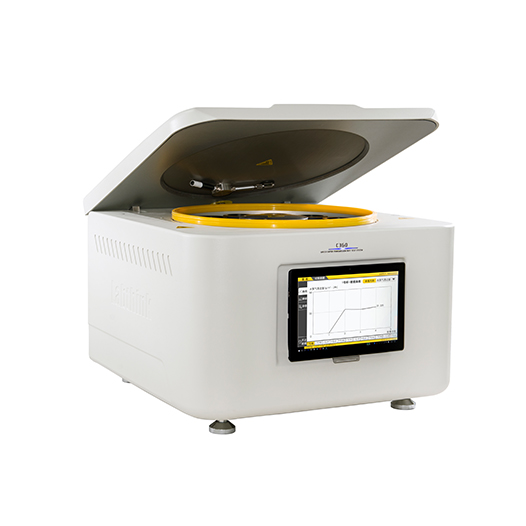
- High Precision: Features a high-precision analytical balance and 360° air circulation technology to maintain a stable environment, eliminating local deviations during testing.
- Automation: The system utilizes a pneumatic chamber-sealing design and automatic zero-resetting, which reduces human error and ensures repeatable results for high barrier films.
- Compliance: Fully compliant with ASTM E96 and ASTM D1653, making it the primary method for moisture permeability testing across the food, pharmaceutical, and construction industries.
By utilizing a high precision water vapor permeability tester, engineers can confirm that their moisture barrier effectively blocks ground vapor, guaranteeing a durable and high-performing epoxy floor installation.