
When discussing food safety, most people focus on the food itself:its ingredients, additives, and nutritional content.
However, there is another critical factor that often goes unnoticed: the materials that come into contact with food.
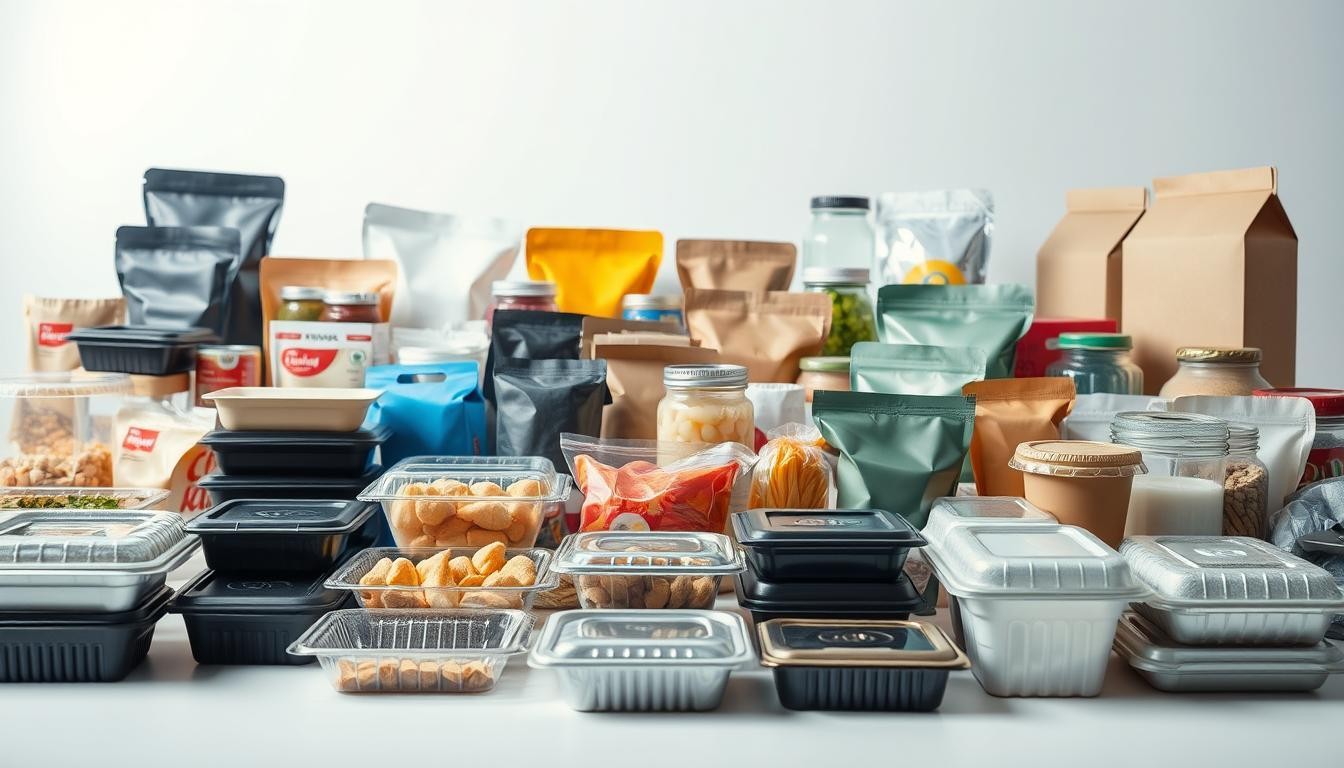
Food packaging, beverage containers, coatings, inks, adhesives, kitchen utensils, and processing equipment all fall under the category of Food Contact Materials (FCMs). Although these materials are not intended to be consumed, they can interact with food during storage, transportation, and use.
This is why food contact materials are subject to rigorous regulatory oversight, particularly in the European Union.
What Are Food Contact Materials?
Food Contact Materials include any material or article intended to come into contact with food, or that may reasonably be expected to transfer substances into food under normal conditions of use.
Examples include:
- Plastic packaging
- Paper and board packaging
- Beverage bottles
- Printing inks
- Coatings and varnishes
- Adhesives
- Kitchen utensils
- Food processing equipment
As food packaging technologies continue to evolve, ensuring the safety of these materials has become increasingly important.
The Foundation of EU Food Contact Legislation
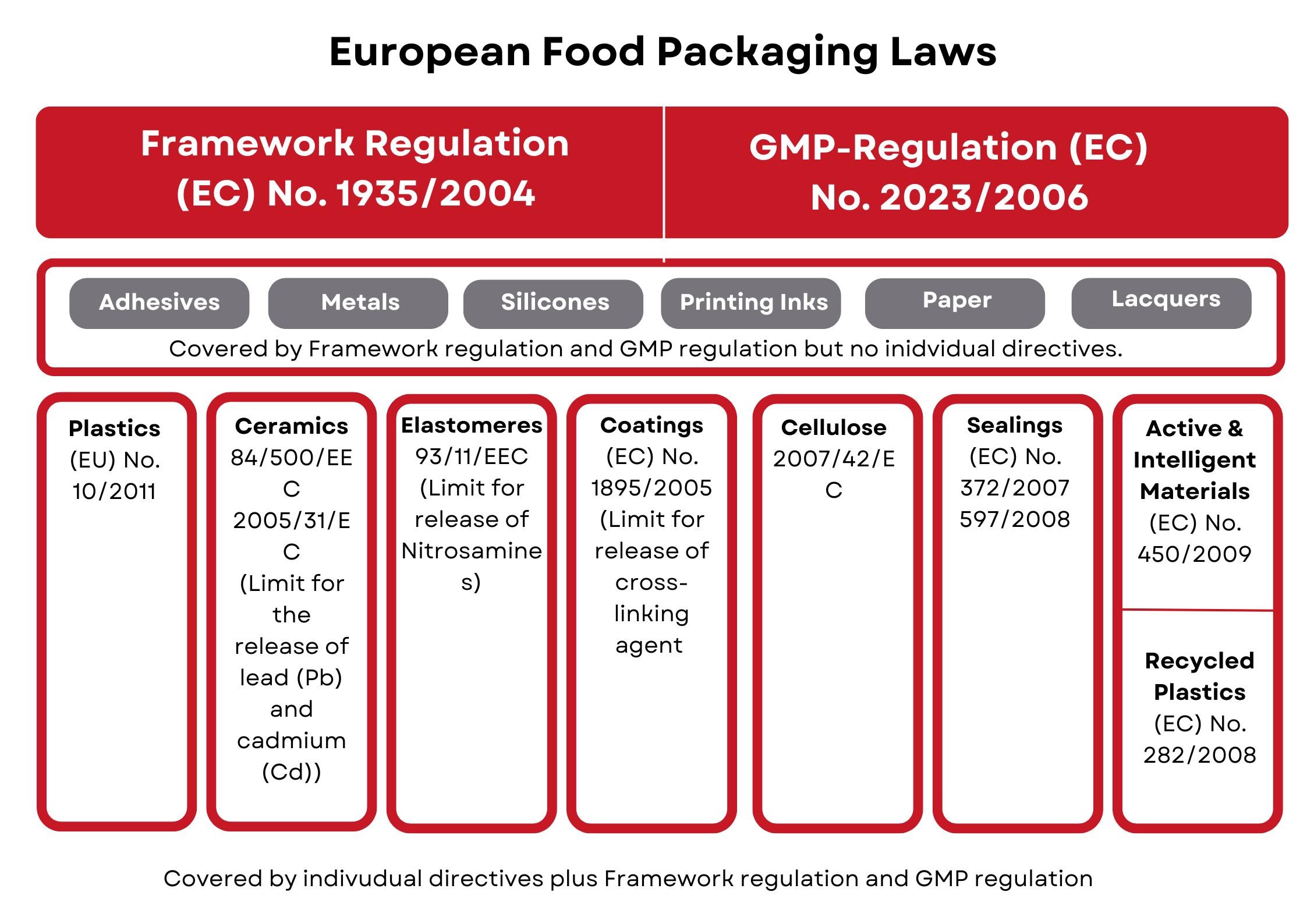
The cornerstone of EU food contact legislation is Regulation (EC) No. 1935/2004, commonly known as the Framework Regulation.
The regulation has two primary objectives:
- Protect consumer health.
- Harmonize regulatory requirements across the European Union.
These goals help ensure both food safety and the free movement of goods within the European single market.
The Core Principle: Controlling Migration
One of the most important concepts in food contact legislation is migration.
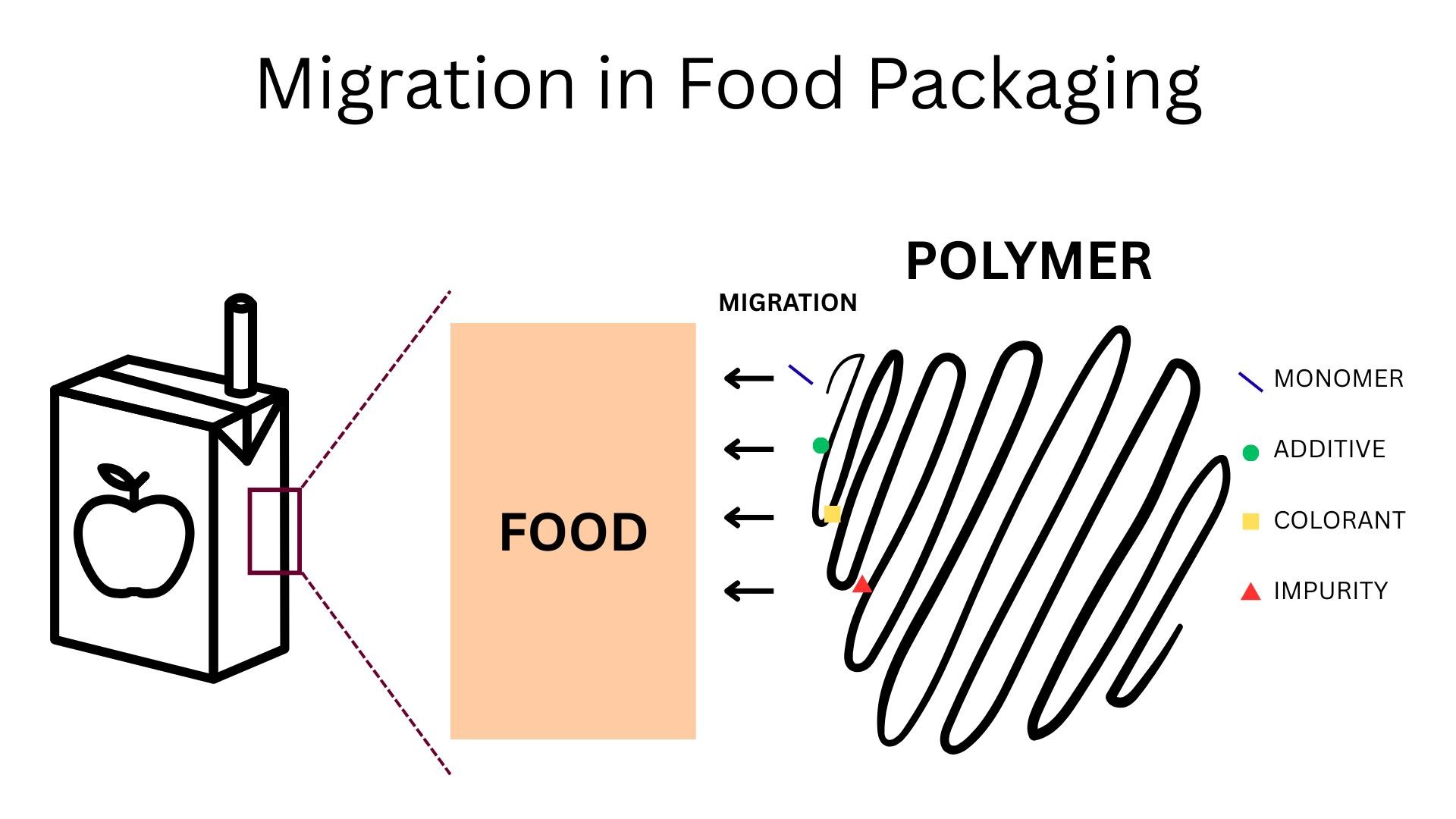
Migration refers to the transfer of substances from packaging or other food contact materials into food or beverages.
According to Article 3 of Regulation (EC) No. 1935/2004, food contact materials must be manufactured in accordance with Good Manufacturing Practice (GMP) and must not transfer constituents to food in quantities that could:
- Endanger human health;
- Cause an unacceptable change in food composition;
- Deteriorate the organoleptic characteristics of food, such as taste or odor.
In other words, food packaging should protect food—not alter it.
Risk Assessment: More Than Just Hazard
A key aspect of the EU regulatory philosophy is risk assessment.
Risk is determined not only by the hazardous nature of a substance, but also by the level of consumer exposure.
As commonly described in food contact safety evaluations:
Risk = Exposure × Hazard
This means that understanding how much of a substance migrates into food is just as important as understanding its toxicological profile.
Therefore, migration testing plays a central role in demonstrating compliance with food contact regulations.
The Importance of Compliance Testing
To evaluate the safety of food contact materials, laboratories perform a variety of migration studies and analytical tests.
Among these, evaporation residue testing is widely used to assess overall migration levels. The test involves extracting potential migrants using food simulants, evaporating the solvent, and determining the amount of non-volatile residue remaining.
The results provide valuable information about the total quantity of substances that may transfer from a material into food.
This type of testing is commonly applied to:
- Plastic packaging materials
- Coatings and varnishes
- Food containers
- Beverage packaging
Supporting Regulatory Compliance
As global regulations continue to evolve, laboratories require reliable and efficient analytical solutions to support compliance testing.
The Labthink C840 Integrated Residue on Evaporation Testing System is designed to support food contact material testing by providing standardized and efficient evaporation residue determination. By improving testing consistency, reducing manual intervention, and supporting regulatory compliance workflows, the C840 Series helps laboratories meet the increasing demands of food contact safety evaluations.
Ultimately, consumers may only see the package and the food inside it. Behind the scenes, however, a comprehensive regulatory framework, scientific risk assessment process, and advanced testing technologies work together to ensure that food contact materials remain safe throughout their intended use.