
For professionals in the flexible packaging sector, controlling the surface properties of plastic films and sheets is just as critical as controlling their barrier or mechanical strength. A key property influencing material handling, processing, and end-user experience is the coefficient of friction (COF). From the high-speed transit of a film through a form-fill-seal (FFS) machine to the smooth stacking of finished pouches, the COF dictates the material's performance. Understanding and controlling this property through reliable coefficient of friction testing services is essential for optimizing machinery efficiency and reducing production costs. We at Labthink provide the precise coefficient of friction test equipment necessary for experienced clients to manage this critical variable.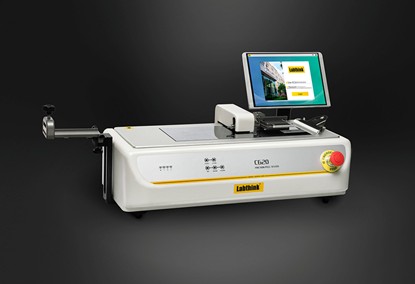
The Critical Definitions of Coefficient of Friction
To effectively manage material behavior, we must precisely define the coefficient of friction—the ratio of the force required to move one surface over another to the force pressing them together. This measurement is critical for analyzing film performance.
Static COF vs. Kinetic COF
COF is categorized into two distinct values, both vital to different stages of the packaging process:
Static COF: This is the force needed to initiate motion between two surfaces. This value is paramount for applications where films must start moving from a standstill, such as at the beginning of a conveyor line or when a printed roll begins to unwind. If the static COF is too high, excessive force is required to start the motion, leading to high tension spikes and potential film breakage.
Kinetic COF: This is the force needed to sustain motion once it has begun. This is the primary concern during the high-speed movement of films over rollers, guides, and sealing jaws. A consistent, low kinetic COF is essential for maintaining smooth, uniform web tension and material flow on the packaging line. Erratic or high kinetic COF can cause the film to chatter or drag, resulting in wrinkles, misaligned graphics, and inconsistent seals.
For plastic films, controlling both static and kinetic COF within narrow tolerances is paramount throughout the manufacturing and distribution cycle.
The Role of Slip Agents
The COF of plastic films is deliberately managed through the incorporation of additives known as slip agents (e.g., erucamide or oleamide) during the film extrusion process. These agents bloom (migrate) to the film surface to create a micro-layer that reduces friction. Precise COF testing is the only way to validate that the correct amount of slip agent has been added and that it has adequately migrated to the surface, ensuring the material meets its functional specifications.
Optimizing High-Speed Processing and Material Handling
In high-volume manufacturing, films are often transported, folded, and sealed at high speeds. The COF directly impacts the efficiency and quality of these operations.
Addressing Machine Downtime and Process Control
In the packaging environment, the ideal COF range is narrow. If the COF is too high, the material drags, causing wrinkles, misfeeds, and tension irregularities, ultimately leading to costly machine downtime. If the COF is too low, the film may slip uncontrollably or fail to be properly gripped by tensioning rollers. By using dedicated coefficient of friction test equipment, quality control technicians can quickly verify that incoming film material meets the precise COF tolerance required for their specific machinery. This pre-verification process prevents expensive process halts before they occur, making the COF tester a vital tool for preventative maintenance and process control.
Ensuring Package Stability and Stacking
After packaging, the COF significantly impacts how finished flexible packages interact with each other during shipping and storage.
Palletizing and Shipping: Finished flexible packages (like bags or pouches) are stacked on pallets, often reaching considerable heights. If the static COF of the outer film layer is too low, stacks can shift or collapse during high-speed conveyor transfers or transit vibrations, leading to product damage and safety issues. A stable stack requires an outer film with a moderate, consistent COF to prevent lateral movement.
Winding and Unwinding Consistency: For film converters, controlling the COF is crucial for achieving tight, uniform rolls without the film layers sticking together—a phenomenon known as "blocking." Accurate coefficient of friction testing services ensure the proper balance of additives is maintained to prevent blocking while still allowing smooth unwinding at the end-user's facility.
Labthink’s Solution: The C620H Coefficient of Friction Tester
Achieving the control necessary for high-speed flexible packaging requires an instrument that delivers high precision and high repeatability. Our C620H Coefficient of Friction Tester is designed as a multi-function instrument to accurately measure the COF of plastic films, sheets, and other flexible packaging materials according to standards like ASTM D1894 and ISO 8295.
Key Features for Accurate COF Determination
The C620H system integrates several features that ensure the accuracy of coefficient of friction testing services for flexible materials:
Precision Load Cell: The core of the instrument is a precision load cell that measures the required tensile force with high precision, accurately capturing both the peak force for static COF and the average force for kinetic COF. This high level of resolution is necessary for differentiating between subtly different film batches.
Variable Speed Testing: The system allows for a customizable test speed , which is critical because the measured COF can be dependent on the speed of material movement. Standard testing is typically performed at 150 mm/min to reflect common machine speeds.
Test Environment Control: The system is built with a rigid, flat, and smooth test platform to ensure a uniform contact area and stable testing conditions. The instrument's mechanical design ensures high quality testing over a long lifespan, minimizing the effects of wear on the measurement accuracy.
Data Analysis: The system provides a clear graphical output of force versus time, allowing operators to visually analyze the stick-slip phenomenon—the cyclical pattern of static friction being overcome, followed by sliding—which is a key characteristic of some polymer surfaces.
Benefits of Labthink COF Test Equipment
Investing in a high-quality coefficient of friction test equipment like the C620H offers substantial benefits to experienced clients focused on efficiency and material qualification:
Process Validation: Consistent measurement over time helps validate the amount and dispersion of slip agents, ensuring material consistency from batch to batch. The high repeatability of the results allows for setting tight, defensible material specification limits.
Troubleshooting: The C620H is an invaluable multi-function tool for diagnosing packaging line problems such as film chatter, inconsistent web tension, or poor sealing, which are often rooted in surface friction issues. Quick, accurate COF testing confirms the root cause of these production losses.
International Standards Compliance: By adhering strictly to international testing standards, the data generated is globally recognized, facilitating material procurement and specification across multinational supply chains.
Conclusion
By integrating this precise and reliable testing into their quality assurance protocols, professionals gain the control necessary to maximize the operational efficiency of their packaging lines and ensure the optimal functionality of their flexible packaging products.