
The answer lies in moving beyond simple visual inspection to quantitative, instrumental methods that offer high precision, allowing for the detection of microscopic defects that manual tests often miss. While various methods exist, pressurized techniques that offer measurable, repeatable data are essential for validating a packaging process.
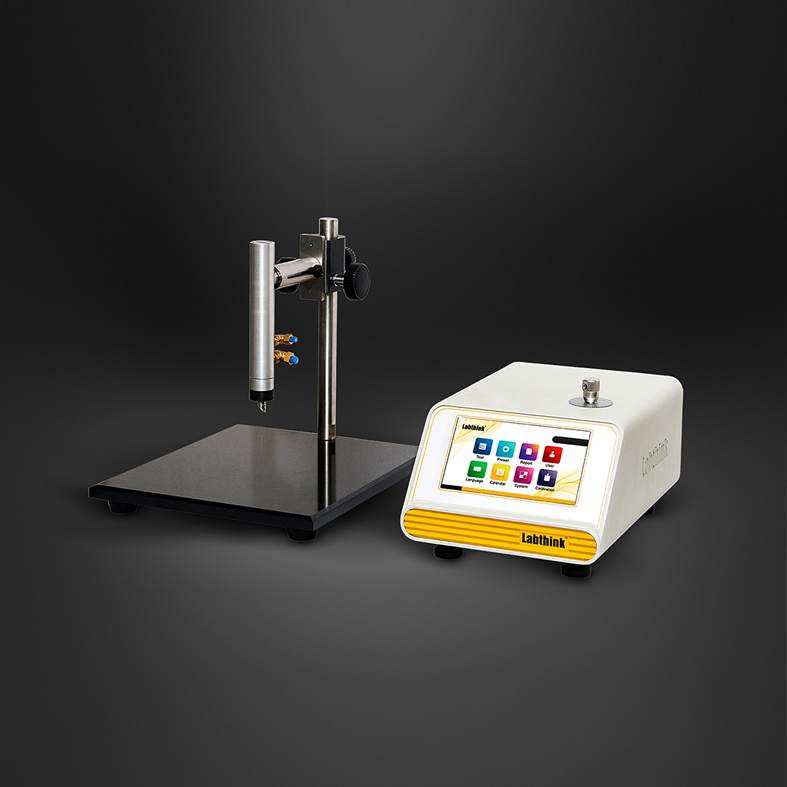
We at Labthink focus on providing sophisticated instrumentation, such as our integrated pouch leak tester and seal strength system, to help experienced clients define and maintain the highest levels of package integrity across their production lines.
The Evolution of Leak Detection for Flexible Packaging
Traditional leak testing methods, such as the water immersion (bubble) test, have long been the industry standard due to their simplicity and low cost. However, for modern, high-barrier flexible materials, the bubble test presents several limitations:
Lack of Quantifiable Data
The primary drawback of the traditional bubble test is its subjectivity. The detection of a bubble is dependent on the operator's vision, the package orientation, and the size of the defect. Furthermore, it only provides a binary result (leak/no leak) and fails to quantify the leak rate or the pressure required to induce failure. This lack of measurable data makes it impossible to link a specific leak size to a stability or shelf-life risk, which is critical for experienced quality assurance teams.
Inconsistency and Sample Destruction
The bubble test relies on package failure under negative pressure (vacuum), which often leads to the rupture of the package, making it unsuitable for retesting or forensic analysis. More importantly, the test is inherently slow and lacks the high repeatability required to monitor process drift in high-speed manufacturing environments.
Quantitative Leak Detection: The Pressure Decay Method
The most accurate and advanced methods for detecting leaks in flexible packaging, such as pouches and sachets, rely on precision instrument-based testing that produces verifiable, quantitative data. The pressure decay method stands out for its high sensitivity and ability to detect minute leaks that often go unnoticed by non-instrumental techniques.
How Pressure Decay Works
The pressure decay method works by placing the flexible package or pouch inside a sealed test chamber. The chamber is then pressurized to a specific, controlled level. The system isolates the chamber from the pressure source and continuously monitors the chamber's pressure over a set period (the test time).
Principle: If the package inside has a leak, the gas (often air) will escape the package and enter the surrounding chamber. This changes the pressure differential between the atmosphere and the chamber, resulting in a measurable decay (drop) in the chamber's internal pressure.
Measurement: A leak tester measures this pressure change with extreme high precision. The system then calculates the precise leak rate or determines if the pressure decay exceeds a pre-defined maximum acceptable limit.
This technique is highly effective because it directly measures a physical parameter (pressure drop) linked to the leak, eliminating operator subjectivity and providing traceable results that can be directly incorporated into quality metrics.
Key Advantages Over Subjective Tests
The pressure decay method offers several critical advantages that align with the needs of experienced packaging teams:
High Sensitivity: Capable of detecting defects as small as a few micrometers, which are crucial for ensuring the integrity of high-barrier films.
Non-Destructive Potential: The test parameters can often be set to a level that tests the package's integrity without destroying the sample, allowing for subsequent inspection or analysis.
Quantitative Results: It provides a numerical decay value, which can be correlated directly to package performance specifications. This allows for process control decisions based on data rather than observation.
Labthink's Integrated Solution: The C660M Leak and Seal Strength Tester
To provide the most accurate assessment of package integrity, we developed the C660M Leak and Seal Strength Tester. This instrument provides a multi-function approach, combining highly sensitive pressure decay leak detection with quantifiable seal strength testing. This is particularly valuable because package leaks are often a result of weak or incomplete seals.
C660M Leak Tester Specifications for Flexible Materials
The C660M is specifically designed as a professional pouch leak tester to provide reliable, high-accuracy results:
Test Range:0 to 600 KPa
Pressure Accuracy:+/- 0.25 percent FS (Full Scale)
Test Capabilities: Performs both pressure decay and seal strength tests, offering a comprehensive package integrity report.
Reliability and Customization
The design emphasizes high quality components to ensure a long lifespan and continuous, reliable operation. We understand that flexible packaging comes in many forms, from simple pouches to complex vacuum-formed trays. Therefore, the C660M offers customizable testing protocols and test chambers to accommodate virtually any flexible package size and configuration.
Conclusion
At Labthink, our clients ensure that the seals on their flexible materials are not only strong but also perfectly sealed against even the smallest atmospheric challenge. This dedication to precision helps maintain product stability and ultimately protects the brand's commitment to quality<