
This guide will outline the critical triggers for immediate re-testing and the industry best practices for maintaining long-term shelf stability.
What events trigger an immediate revalidation of food packaging and shelf life?
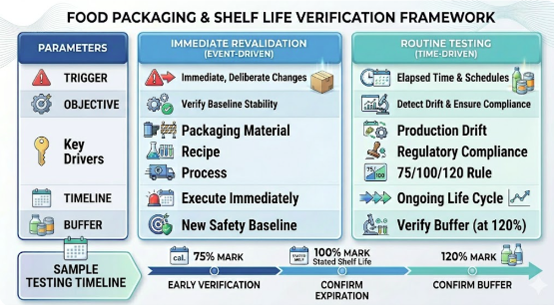
You should not wait for an annual audit to re-evaluate your products if any of the following changes occur:
- Packaging Material Transitions: Switching suppliers or moving to eco-friendly/recyclable films is the most common trigger. These materials often have different density profiles; even a slight change in the thickness of a barrier layer alters the Oxygen Transmission Rate (OTR), mandating a new study.
- Recipe Reformulation: Tweaking preservatives, reducing sodium (which acts as a stabilizer), or altering pH levels directly impacts microbial growth. Any shift in water activity invalidates your historical data.
- Process & Distribution Shifts: Introducing new retort equipment, changing sterilization temperatures, or moving from a regional refrigerated model to a national ambient distribution model introduces thermal stress variables that can compromise the seal or the food chemistry.
Even if your recipe and packaging remain 100% identical, "routine" testing is essential for several reasons:
- Production Drift: Subtle, seasonal inconsistencies in raw materials or the natural wear and tear of sealing machinery can cause gradual shifts in shelf stability.
- Regulatory Compliance: Global safety standards like SQF, BRC, and FSIS require manufacturers to prove their labels are accurate through periodic verification.
- The "75/100/120" Rule: Industry best practice involves pulling "retain samples" from the warehouse at the 75%, 100%, and 120% marks of their stated shelf life. Testing at the 120% mark provides a "safety buffer," ensuring the product is still organoleptically pleasing (taste, texture, odor) even if a consumer eats it slightly past the expiration date.
How do unexpected incidents impact canned food shelf life assumptions?
Sometimes, the product tells you it’s time to revalidate.
- Customer Complaints: A spike in reports regarding "blown" packaging, off-odors, or premature spoilage in canned food shelf life is a red flag. It indicates that your historical data is no longer reflective of your current production output.
- Failed QC Swabs: If routine microbial swabs fail prior to the expiration date, production must halt. An immediate Accelerated Shelf-Life Test (ASLT) is typically required to find the point of failure and establish a new, safe timeline.
The most common reason for a failed shelf-life revalidation is a failure in the packaging barrier. Labthink provides the precision tools needed to ensure your packaging and shelf life remain in sync:
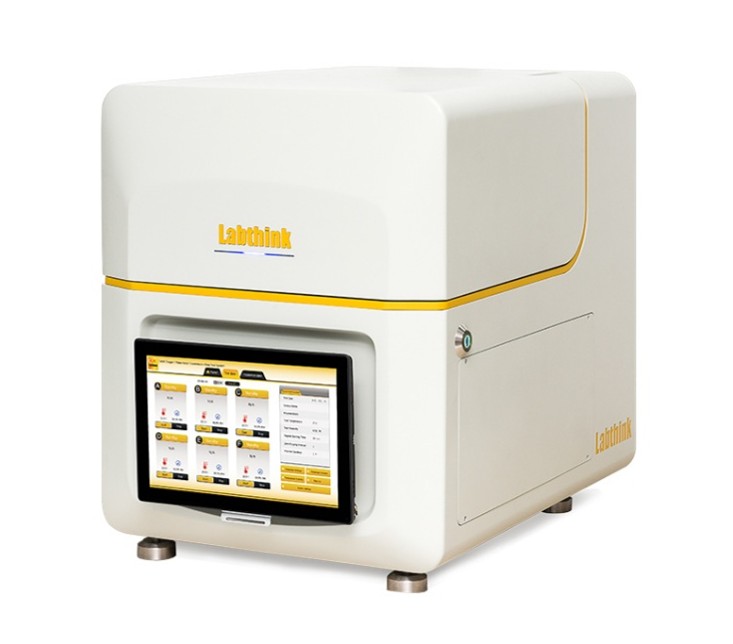
- Barrier Verification: Before committing to a new sustainable film, use Labthink’s Oxygen Transmission Rate (OTR) and Water Vapor Transmission Rate (WVTR) analyzers. This ensures the new material matches the "gold standard" of your originally validated packaging.
- Seal Integrity: Many "premature spoilage" incidents are caused by micro-leaks. Labthink’s Leak and Seal Strength Testers verify that the mechanical seal is strong enough to survive the vacuum of a can or the pressure of a pouch.
- Headspace Analysis: By monitoring the residual gas inside a package over time, Labthink instruments help you predict failures before they become a market recall.
Revalidating shelf life is not just a regulatory hurdle—it is a critical component of quality insurance. Whether you are changing materials to meet sustainability goals or simply conducting an annual check, precision data is your best defense against spoilage.Labthink is a global leader in providing professional quality control solutions for the food and packaging industries. Our instruments help you bridge the gap between material science and food safety.