
When a lithium-ion battery enters thermal runaway, the danger extends far beyond heat and flames. Toxic gases—including carbon monoxide, hydrogen fluoride, and volatile organic compounds—can escape through microscopic pathways invisible to standard leak checks. For manufacturers of battery packs, electric vehicles, and energy storage systems, the question is urgent: how gas-tight is your housing really? At Labthink, a multinational technology company specializing in precision testing solutions for packaging materials analysis, we have spent decades helping industries answer exactly that question. Through rigorous gas permeation test methods, we identify hidden risks and prevent toxic releases before they reach the field.
The Hidden Threat: Why Permeation Beats Leak Testing
Conventional helium or air leak tests measure only gross defects—pinholes, cracks, or failed seals. They cannot detect gradual gas permeability through polymer composites, multilayer films, or sealed interfaces. During thermal runaway, internal pressure surges and temperatures climb, accelerating molecular diffusion. A housing that passes a quick leak check may still permit hazardous gas permeability over minutes or hours. That is why a dedicated gas permeation test under simulated abuse conditions is essential. Without it, you are shipping products with an unknown safety margin.
Labthink VAC-V2 (EX): Safe, Precise Gas Permeability Testing for Toxic and Flammable Gases
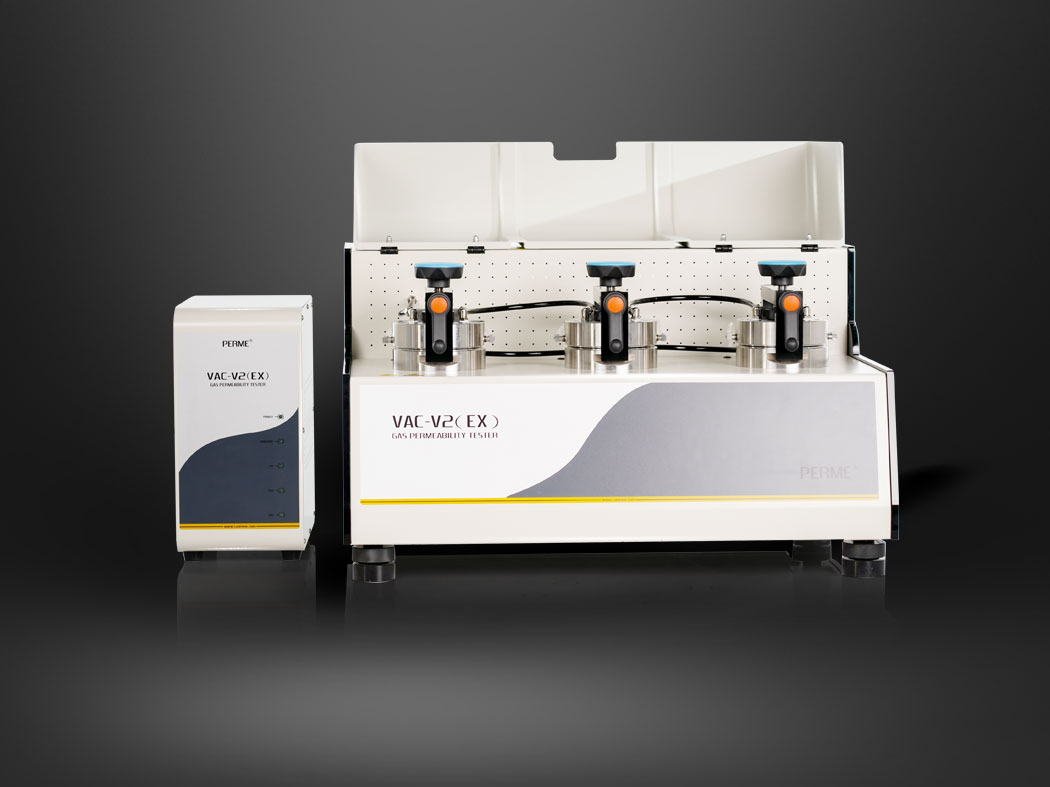
Labthink’s VAC-V2 (EX) Gas Permeability Tester is engineered specifically for this challenge. Based on the differential pressure method, it professionally determines the gas transmission rate of common gases as well as toxic, flammable, or explosive gases. The instrument measures not only transmission rate but also solubility coefficient, diffusion coefficient, and permeability coefficient—across plastic films, composite films, high barrier materials, sheeting, and aluminum foils at varied temperatures.
Safety is paramount. The VAC-V2 (EX) applies Labthink’s advanced split control system, achieving complete separation of the tester mainframe and control module to eliminate ignition sources when testing flammable or explosive gases. The tester has passed TUV safety certification, giving you third-party validation. Three independent test cells run simultaneously, testing identical or different samples in a single operation. You obtain a full material profile: gas transmission rate, permeability coefficient, solubility coefficient, and diffusion coefficient—all from one reliable gas permeation test.
From Laboratory to Production Line: Building a Gas-Tight Strategy
Data alone is not enough. You need actionable insight. Labthink also provides expert testing services from our own state-of-the-art laboratory facilities, supporting your R&D, quality assurance, and failure analysis teams. Whether you are qualifying a new barrier material, auditing production batches, or investigating a field return, our team helps you interpret gas permeability results and set meaningful specifications.
Securing the Future: Make Permeation Visible
Thermal runaway cannot always be prevented—but toxic gas leaks can be contained. The difference is measurement. By embedding gas permeation test protocols into your design and quality workflows, you move from assumption to evidence. At Labthink, we turn invisible risks into measurable data. Contact us today. Because a gas-tight housing isn't just a feature—it's a responsibility.