
When the integrity of a product depends on keeping humidity at bay, the choice of packaging material becomes a strategic decision. Moisture-proof packaging relies on specific plastic materials engineered to act as formidable barrier against environmental water vapor. The plastics best suited for this purpose are those with inherently low permeability, typically including high-density polyethylene (HDPE), polyvinylidene chloride (PVDC)-coated films, ethylene vinyl alcohol (EVOH) copolymers, and specialized multilayer laminates that combine these materials. For applications demanding the highest level of protection—such as pharmaceutical blister packs, medical device sterilization pouches, and sensitive electronic components—barrier films often incorporate aluminum foil layers or ceramic coatings to achieve near-impermeable performance. Selecting the correct material requires not only understanding polymer chemistry but also quantifying exactly how effectively a given structure resists moisture ingress under real-world conditions.
Quantifying Barrier Performance by WVTR Testing
The true measure of a moisture-proof plastic lies in its moisture vapor transmission rate, a critical parameter that defines how much water vapor passes through a material over a specific time and area. For packaging engineers, comparing water vapor transmission rate plastics options involves rigorous testing to ensure that the selected substrate meets the required protection thresholds. High-performance barrier plastics such as PVDC-coated PET can achieve exceptionally low transmission rates, often below0.01 g/m2/day, making them indispensable for products that cannot tolerate even trace moisture. Conversely, standard polyolefins like LDPE or PP exhibit higher transmission rates and are therefore limited to applications where moderate moisture resistance suffices. Understanding these distinctions allows manufacturers to align material selection with product shelf-life requirements and regulatory standards.
Advanced Testing Method for Accurate Assessment
Achieving reliable data on material performance demands precision instrumentation that can detect minute variations in vapor transmission. The industry standard for evaluating high-barrier materials is the infrared sensor method, which offers the sensitivity required to measure extremely low permeation levels. This methodology provides consistent, repeatable data that directly informs material qualification, quality control, and supplier verification processes. For manufacturers of moisture-sensitive goods, the ability to accurately characterize moisture vapor transmission rate performance is not merely a technical exercise—it is a fundamental component of risk management and product safety assurance.
The Role of Multilayer Structures in Achieving Superior Barriers
In many instances, no single polymer provides the complete balance of barrier properties, mechanical strength, and cost-effectiveness required for a given application. This has driven the widespread adoption of multilayer coextruded or laminated structures that combine complementary materials. A typical high-barrier flexible packaging structure might pair an EVOH core—renowned for its exceptional oxygen and moisture barrier—with outer layers of polyolefins for sealability and mechanical protection. Alternatively, metallized films or transparent ceramic-coated films offer high-barrier solutions without the opacity of aluminum foil. Each of these structures must undergo thorough water vapor transmission rate plastics evaluation to validate that the combined layers perform as intended, particularly at seal areas and fold points where barrier integrity can be compromised.
Partnering for Precision in Barrier Evaluation
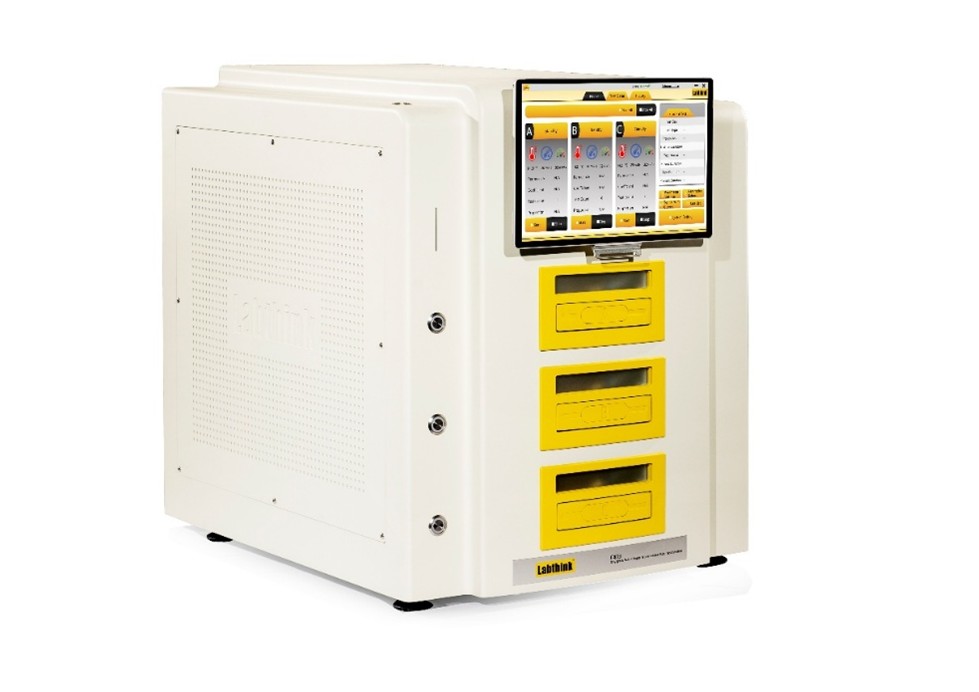
Ultimately, selecting the right plastic for moisture-proof packaging is a data-driven process that depends on accurate, reproducible testing. At Labthink, we understand that reliable barrier assessment forms the foundation of product protection strategies. The Labthink Water Vapor Transmission Rate Test System is essential for water vapor transmission rate (WVTR) testing. This advanced water vapor permeability tester performs highly accurate WVTR measurements, serving as a reliable water vapor permeation tester for films, plastics, and beyond, providing consistent and accurate moisture vapor transmission data. Compliant with ASTM F1249, it utilizes an infrared sensor for high-precision assessment of water vapor transmission, making it ideal for evaluating the water vapor transmission performance of plastic packaging materials in food, pharmaceutical, and electronics applications.
With our patented infrared moisture sensor technology enabling lower test limits and ensuring accuracy, combined with long service life, non-consumable design, and integrated safety features, we empower our clients to confidently qualify materials that safeguard product integrity across the most demanding moisture-sensitive industries.