
For those of us working in food quality assurance, material science, or packaging engineering, food packaging is far more than just a container; it is the first and most critical line of defense for product integrity and consumer safety. The fundamental requirements of packaging—particularly flexible packaging materials like films, pouches, and laminates—must be met with precision and verified through rigorous testing.
At Labthink, we understand that our experienced clients are focused on quantifiable performance metrics. The basic requirements of food packaging translate directly into measurable material properties and essential regulatory compliance standards that demand accurate, scientific validation. We focus on three core pillars that underpin all food packaging decisions: Preservation, Safety, and Structural Integrity.
1. Preservation: Controlling the Environment
The most immediate requirement of food packaging is to extend the product's shelf life by controlling its internal and external environment. This hinges primarily on the barrier properties of the flexible film.
The Critical Role of OxygenTransmission Rate in Food Packaging
Among all permeants, oxygen transmission rate food packaging is arguably the most vital factor for quality retention. Oxygen accelerates oxidation, which leads to spoilage, rancidity in fats, and degradation of nutrients and color in many food products.
To maintain product freshness, the flexible packaging material must effectively limit the ingress of atmospheric oxygen.
Low OTR Requirement: For oxygen-sensitive products like coffee, processed meats, and most dried foods, the packaging requires an extremely low Oxygen Transmission Rate. A higher barrier translates directly into a longer, more stable shelf life.
High OTR Requirement: Conversely, some fresh produce utilizes packaging that is intentionally designed to allow a controlled, higher OTR to facilitate the product’s natural respiration.
We equip professionals with the tools necessary to precisely measure this critical variable. Accurate OTR data is essential for validating the performance of materials used in both traditional vacuum sealing and Modified Atmosphere Packaging (MAP).
Water Vapor Transmission Rate (WVTR): Prevents moisture loss, which causes desiccation in baked goods and moisture-laden foods, or moisture gain, which causes caking in powders and can accelerate microbial growth.
Measuring these rates ensures that the final packaged product maintains its intended texture, flavor, and nutritional value from the factory floor to the consumer’s pantry.
2. Safety: Ensuring Compliance and Product-Material Compatibility
Safety encompasses the regulatory standards and physical risks associated with the packaging material itself.
Non-Toxicity and Migration
A fundamental requirement is that the flexible packaging material must be non-toxic and chemically inert with respect to the food it contains. This necessitates rigorous testing for material migration.
Migration testing measures the transfer of packaging components (e.g., plasticizers, stabilizers, inks, and residual monomers) from the film into the food simulant. For food contact materials, these migration levels must remain well below regulatory limits defined by agencies like the FDA or EFSA. Experienced professionals know that multi-layered laminates, adhesives, and printing inks must all be assessed, as each component poses a potential risk of chemical transfer.
The Role of the OTR Tester and Headspace Gas Analysis
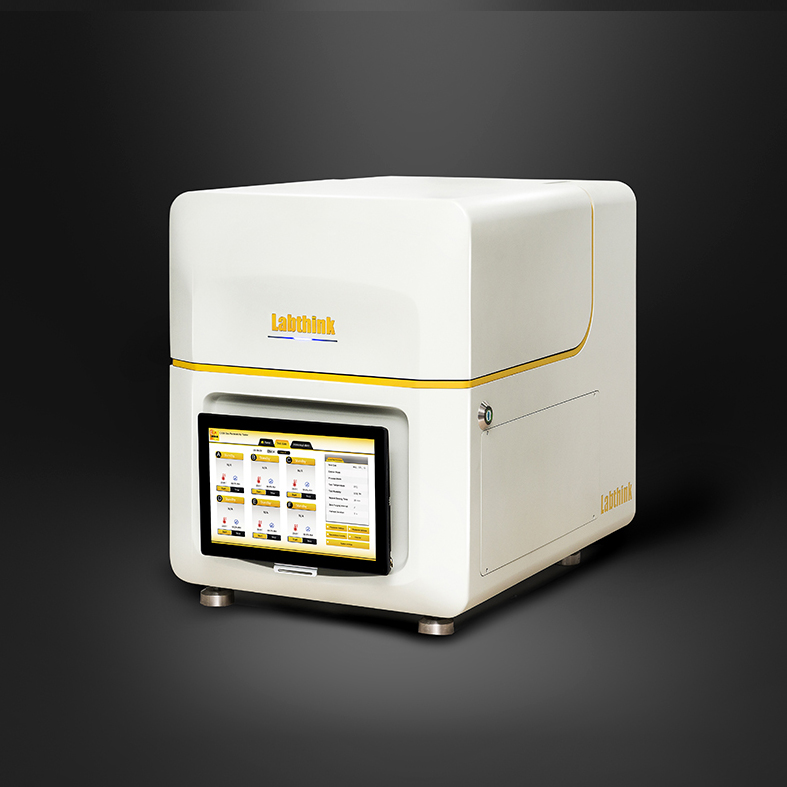
To ensure continuous safety and compliance, materials must be verified using precise instrumentation. While the OTR tester confirms the material's barrier function, for MAP applications, the internal environment is equally crucial. This is where instruments like the Headspace Gas Analyzer step in to measure the actual concentration of gases within the sealed package. Maintaining the correct gas mixture (often a blend of nitrogen, carbon dioxide, and minimal oxygen) is essential to inhibit microbial growth and chemical reactions.
3. Structural Integrity: Protection and Performance
The packaging must withstand the entire supply chain—from filling and sealing to distribution and display—without compromising its barrier or containment function.
Mechanical Strength and Sealing Integrity
Flexible packaging must demonstrate adequate mechanical properties:
Puncture and Tear Resistance: The film must resist tearing and puncture during automated handling, stacking, and consumer opening.
Tensile and Elongation Properties: These factors determine how the film performs on high-speed packaging machinery and resists stretching or breaking under load.
Crucially, the integrity of the heat seals is paramount. A film with excellent barrier properties is useless if the seal is faulty. Seal strength testing is essential to ensure that the seals are consistent, strong, and maintain the material’s intended barrier function along the seam. We provide solutions designed for precise seal integrity testing to minimize the risk of micro-leaks or bursting during transit.
Detailed Specifications of the C650MHeadspace Gas Analyzer
For professionals dealing with Modified Atmosphere Packaging (MAP), precise verification of the internal gas mixture is non-negotiable. The Labthink C650M Headspace Gas Analyzer provides an accurate measure of oxygen and carbon dioxide within the package. The testing range for O? is 0 to100%, for CO? is 0 to 100%, with a measurement accuracy of ±2%.The analyzer can also be configured to measure gas concentration in liquid products. It features quick calibration and is designed for rapid, on-site testing. This capability directly supports the basic requirement of preserving food quality by confirming the effectiveness of the MAP process itself, ensuring the intended gas composition is maintained within the flexible packaging to slow decay.
Conclusion
By providing instrumentation like the C206H OTR tester and C650M Headspace Gas Analyzer , we ensure you can confidently verify that your packaging solutions meet the complex requirements for modern food safety, preservation, and structural integrity.