
Understanding how water vapor interacts with materials is essential for anyone involved in packaging, product design, and material science. At Labthink, we are dedicated to helping professionals evaluate moisture barrier properties using precise tools such as the water vapor permeability tester. In this article, we explore what high water vapor permeability means and why the water vapor permeability test plays a vital role in material selection and performance evaluation.
Defining Water Vapor Permeability
Water vapor permeability refers to the rate at which water vapor passes through a material surface under set conditions. It is commonly quantified in terms of water vapor transmission rate (WVTR) or moisture vapor transmission rate (MVTR), representing the amount of vapor that travels through a given area over a specific time period. Labthink's range of water vapor permeability testers supports methods defined by standards such as ASTM E96 and ASTM F1249, which are widely accepted in the packaging and material testing industries.
These tests measure moisture movement through films, sheets, composites, and other structures. The data obtained from a water vapor permeability test reveals how a material behaves when exposed to different humidity and temperature conditions. Knowing this helps in predicting how the material will perform in real-world applications where moisture exposure is a concern.
High Water Vapor Permeability Explained
When a material displays high water vapor permeability, it means that water vapor can travel through it more readily. In practical terms, a high value in a water vapor permeability test indicates that the material allows moisture to pass through its structure without significant resistance.
This can be desirable or undesirable depending on the application. For materials used in breathable textiles or breathable packaging, higher permeability may enhance comfort, reduce condensation, and enable controlled moisture exchange. On the other hand, in applications where moisture protection is critical, such as food packaging, pharmaceutical blister packs, or electronic component packaging—high water vapor permeability could compromise product integrity by allowing humidity to reach sensitive contents. In these cases, low permeability is usually preferred.
Interpreting Test Results with Labthink Instruments
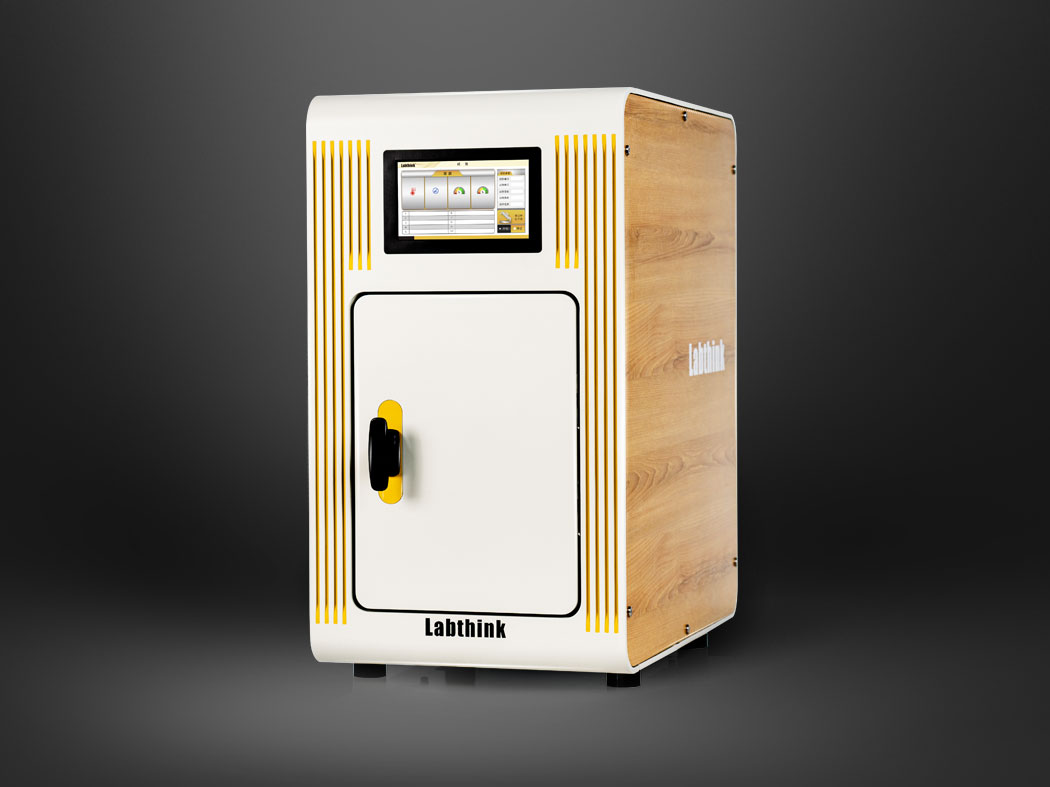
Labthink's water vapor permeability testers provide accurate and repeatable measurements that support a range of standards. Our instruments apply methods such as the gravimetric test or sensor-based techniques to quantify WVTR values. These results help scientists, engineers, and quality control teams make informed decisions about material suitability for specific uses.
For example, films with lower WVTR values are typically chosen for moisture-sensitive products because they limit the passage of water vapor. Conversely, materials with higher WVTR values might be selected for applications where moisture exchange is beneficial. The specific threshold values for what is considered high or low permeability vary based on industry requirements and environmental conditions.
Conclusion
High water vapor permeability indicates that a material permits moisture to pass through it with relative ease. This can be advantageous in applications requiring breathability but problematic in moisture-sensitive environments. Using a water vapor permeability tester from Labthink, manufacturers and researchers can perform detailed water vapor permeability tests to understand moisture behavior in materials and guide decisions about packaging design and material selection. Accurate test data ensures materials are fit for purpose, whether the goal is moisture resistance or controlled vapor exchange.