
For any product sensitive to moisture, the package’s ability to resist water vapor intrusion—measured as the water vapour transmission rate (WVTR) or moisture vapor transmission rate (MVTR)—is a critical factor for ensuring quality and extending shelf life. While the core scientific principle of water vapor permeation remains consistent, the specific regulatory environment, testing conditions, and acceptance criteria for flexible packaging in the food and pharmaceutical industries introduce key differences that packaging professionals must address.
We at Labthink understand that for experienced clients in these sectors, the difference between a compliant package and a failed product often comes down to the precision of barrier testing.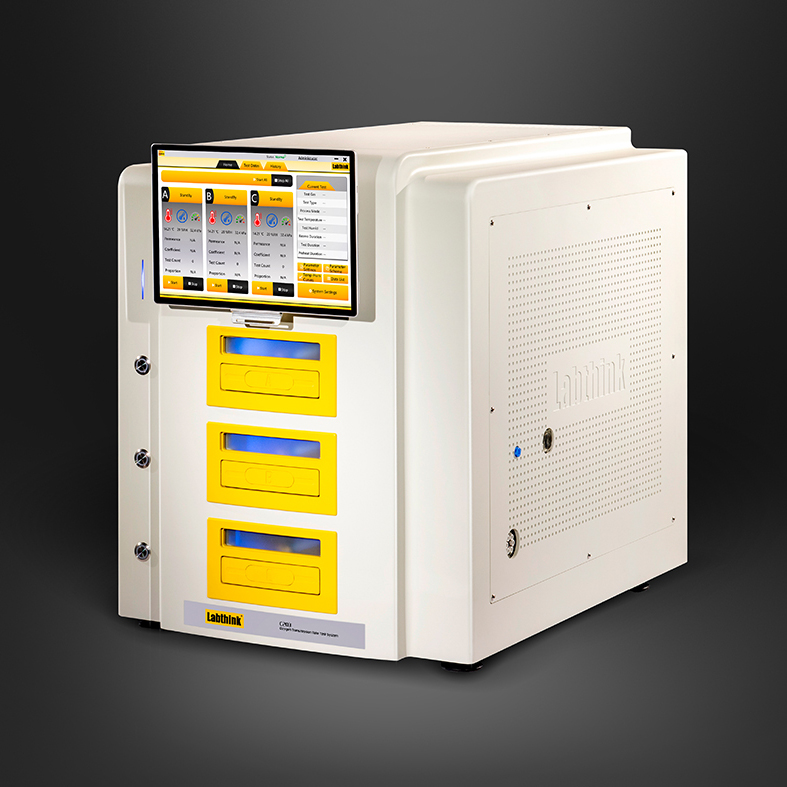
1.The Fundamental Drivers of WVTR Testing
The fundamental goal of WVTR testing in both food and pharmaceutical applications is to quantify the steady-state rate at which water vapor passes through a packaging material or complete package. This rate is typically expressed in units of grams per square meter per 24hours.
In both Food and Pharmaceutical packaging industries, a lower WVTR value signifies a superior moisture barrier, which is essential to protect the product inside.
Food Packaging: Low WVTR prevents dry foods(like cereals or chips) from becoming stale or wet foods (like cheese or certain processed meats) from drying out or promoting microbial growth, directly affecting consumer appeal and safety.
Pharmaceutical Packaging: Low WVTR is paramount for maintaining the efficacy and stability of moisture-sensitive drugs, such as certain tablets, capsules, and active pharmaceutical ingredients(APIs). Moisture intrusion can accelerate degradation, rendering the medication ineffective or even harmful.
The most precise instrumental testing methods, such as the infrared sensor method (often referenced in standards like ASTM F1249), are preferred in both fields due to their ability to provide accurate measurements in a much shorter timeframe than traditional gravimetric cup methods.
2.Key Differences in Standards and Methodology
While both industries utilize globally recognized standards from organizations like ASTM and ISO, the specific standards and how results are reported reflect the distinct regulatory frameworks and product sensitivities.
Regulatory Context and Testing Standards
The most significant difference lies in the ultimate regulatory authority and the standards they mandate or reference:
Food Packaging: Testing often relies on general flexible packaging standards like ASTM F1249 (Standard Test Method for Water Vapor Transmission Rate Through Plastic Film and Sheeting Using a Modulated Infrared Sensor) and ISO 15106-2. These standards focus on the film or sheet material itself and are essential for material selection.
Pharmaceutical Packaging: The focus shifts more heavily to regulatory compliance with authorities like the U.S. Pharmacopeia (USP). The emphasis here is often on the entire container-closure system, not just the flat material.
Reporting Method and Acceptance Criteria
The pharmaceutical industry differs from food packaging in its common reporting metric to align with drug dosage or package form.
Food Packaging: The key focus is on material selection and shelf life modeling to maintain commercial and shelf life targets.
Pharmaceutical Packaging: The unit is used to meet regulatory compliance and stability study requirements. Acceptance criteria are based on USP classification (e.g., classifying a package as "tight" or " well-closed ").
The pharmaceutical approach of reporting asmg/day per package (as outlined in ASTM D7709) allows for a direct comparison of barrier performance between different package formats (e.g., a blister pack versus a multi-dose bottle), which is critical for stability testing and regulatory submissions.
Test Conditions (Temperature and Humidity)
Although testing is always conducted under controlled conditions, the specific climate used is often driven by regional stability requirements:
Pharmaceutical Packaging: The pharmaceutical industry frequently references ICH (International Council for Harmonization of Technical Requirements for Pharmaceuticals for Human Use)climatic zones. Standard stability studies, and therefore WVTR testing, are often conducted at conditions such as 40 and 75RH to reflect global market conditions and accelerate potential moisture-related degradation.
3.Labthink's Solution: Precision for Flexible Materials
For professionals navigating the rigorous demands of both food and pharmaceutical flexible packaging, having a reliable testing platform is non-negotiable.
Our C303H Water Vapor Transmission Rate Test System is engineered to meet the high demands of experienced users who require high precision and high repeatability for their flexible films, laminates, and barrier coatings.
C303H System Specifications for Advanced Testing
The C303H system, utilizing the state-of-the-art patented infrared sensor method, offers exceptional performance tailored for quality control and R&D applications:
Test Scope (WVTR): 0.005 -100 g/m^2/day
Resolution: 0.0001 g/m^2/day
Temperature Range: 15 degrees Celsius - 55 degrees Celsius
Humidity Range: 5% RH - 90% RH
Test Stations: independent stations for parallel testing, enhancing laboratory efficiency.
Standards Compliance: Fully supports ASTMF1249, ISO 15106-2, and is suitable for determining the WVTR of materials used in applications referencing USP.
We designed the C303H with multi-function capability to allow testing across a wide range of industry standards and highly stable components to ensure a long lifespan under continuous use. The optional customizable temperature and humidity programs allow us to simulate precise application environments, providing our clients with the robust and reliable data necessary to confidently select and validate their moisture vapor transmission rate barriers. Our commitment to high quality and accurate data enables our professional clients to meet the stringent preservation and regulatory requirements of both the food and pharmaceutical sectors.