
We understand that for experienced professionals in the food industry, selecting the right flexible packaging is a complex engineering decision, not just a matter of aesthetics. The basic requirements of food packaging go far beyond mere containment; they are the fundamental pillars of safety, compliance, and guaranteed shelf life. At Labthink, we focus on providing the analytical tools necessary to validate the performance of flexible materials against these demanding requirements, with a particular emphasis on barrier integrity.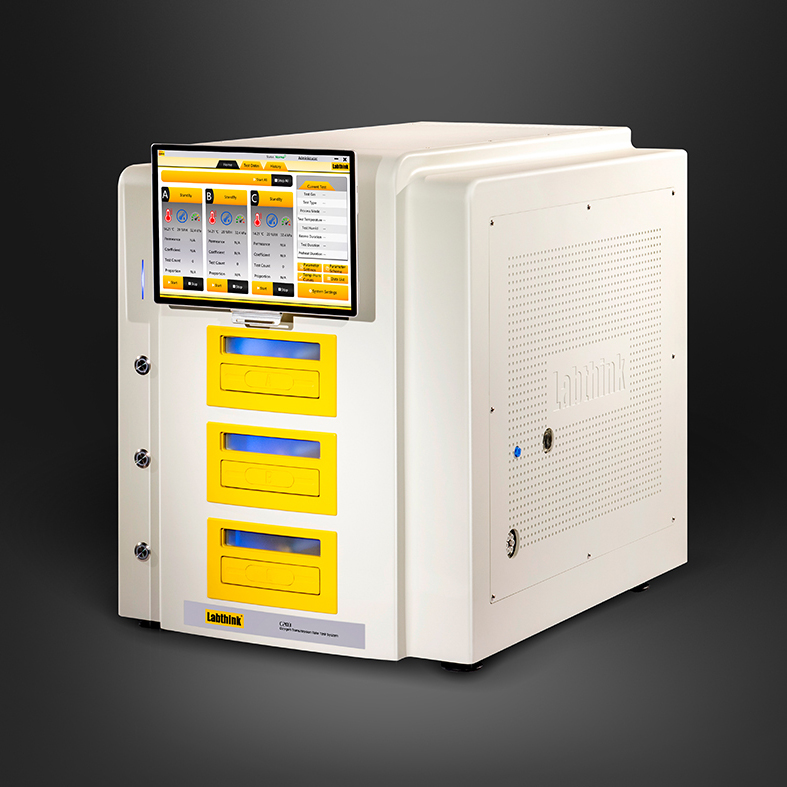
1.The Paramount Requirement: Safety and Regulatory Compliance
The most basic and non-negotiable requirement for any food packaging material is that it must be safe for direct contact with the food product. This is primarily governed by regulatory bodies worldwide (e.g., FDA in the US, EFSA in the EU).
Non-Toxicity and Migration Control: We emphasize that packaging materials must not leach (migrate) harmful substances, chemicals, or volatile organic compounds (VOCs) into the food over the product’s lifespan, even when exposed to fluctuating temperatures. This means the resins, inks, adhesives, and coatings used in flexible laminates must be fully certified as food-grade. Testing migration levels, material purity, and odor transmission is critical to meeting this safety standard.
Physical Protection: The material must provide structural integrity to protect the food from external physical damage, such as compression, puncture, and abrasion during transit and handling. For flexible packaging, this often involves rigorous analysis of puncture resistance, tear strength, and package integrity to ensure the barrier remains unbroken.
2.The Essential Barrier Requirement: Preserving Quality
To extend shelf life and maintain the intended sensory and nutritional properties of the food, the packaging must offer high barrier performance against specific environmental elements. This is where advanced material testing becomes crucial.
Moisture Barrier: The package must control the passage of water vapor measured as Water Vapor Transmission Rate(WVTR) to prevent hygroscopic foods (e.g., powders, coffee) from becoming damp or moist foods (e.g., meats, bakery items) from drying out. Inflexible packaging, this is essential for controlling texture and preventing microbial activity.
Light Barrier: For products sensitive to photo-oxidation (like oils, spices, and certain vitamins), the packaging must block UV light. This is typically achieved using opaque polymers, metalized films, or aluminum foil layers within the laminate structure.
Oxygen Barrier: Oxygen is the primary catalyst for spoilage in many packaged foods, causing oxidation, color degradation, and rancidity. Consequently, a low oxygen transmission rate (OTR) is a critical specification for flexible packaging used with coffee, snacks, cheese, and processed meats. Measuring OTR precisely with a dedicated OTR tester is paramount for ensuring oxygen transmission rate food packaging performs as designed.
3.Advanced Barrier Validation with the Labthink OTR Tester
As experts in barrier analysis, we recognize that the accuracy of the OTR tester directly translates to the reliability of a client's shelf-life guarantee. Our C203H Oxygen Transmission Rate Test System is engineered specifically for the precision required by high and medium gas barrier flexible materials.
The C203H is based on the highly reliable Coulometric sensor method (ASTM D3985), which provides an absolute measurement value and eliminates the need for frequent calibration, ensuring high precision results. This instrument's technical capabilities include:
Ultra-Low Detection Limits: The C203H can measure OTR across a wide standard range, from 0.01 to 200(cc/m2·d). This wide range allows for the accurate evaluation of advanced high-barrier flexible films, which is essential for maximizing product shelf life.
High Efficiency and Repeatability: The instrument features an independent three-cell integrated test block, enabling the simultaneous testing of three samples under identical, controlled conditions. This dramatically increases throughput and ensures high repeatability, which is critical for validating flexible film batches.
Precise Environmental Control: The system offers precise control over test temperature. This capability allows our experienced users to simulate various storage and transport conditions accurately.
The long lifespan of our Coulometric sensor, engineered to last significantly longer than traditional sensors, further ensures a high quality, long-term testing solution for our B2Bpartners. This multi-function capability combined with its robust design underscores our commitment to providing a powerful OTR testing equipment that truly delivers value.
4.Functional and Marketing Requirements for Food Packaging
Beyond safety and preservation, effective flexible food packaging must meet several practical and commercial requirements throughout its entire lifecycle:
Seal Integrity: The seals must be consistently robust to maintain the internal barrier and prevent contamination. We cannot stress enough that poor seal strength can negate the excellent barrier properties measured by the OTR tester. Our clients must also test peel strength and heat seal range to ensure processing efficiency.
Ease of Use: The packaging must be easy for the consumer to open and, increasingly, reseal (e.g., zippers or press-to-close features) to maintain freshness after the initial opening.
Product/Machine Compatibility: The flexible material structure must be fully compatible with the high-speed form-fill-seal(FFS) machinery used in packaging plants. The material must have the correct coefficient of friction and tensile strength to run efficiently without jams or structural failure.
Information and Branding: Packaging serves as the primary medium for essential regulatory information and brand messaging, requiring high-quality print receptivity without compromising the barrier layers.
5.The Economic Value of Precision Testing
For our sophisticated clientele, the investment in a Labthink OTR tester like the C203H is a direct investment in minimizing risk and optimizing material use. By having high precision OTR data, packaging engineers can confidently:
Avoid Over-Engineering: Precisely match the barrier material to the required shelf life, preventing the unnecessary use of expensive high-barrier materials (like foil or EVOH) and thereby reducing production costs.
Troubleshoot Failures: Quickly diagnose whether a spoilage issue is a material failure (low OTR) or a process failure(poor seal), saving months in investigation time.
Validate Sustainable Films: Accurately verify that thinner, mono-material, or biodegradable flexible films, developed for sustainability, still meet the minimum oxygen transmission rate food packaging requirements, mitigating the risk of product loss.
Conclusion
We empower our clients to achieve high repeatability and multi-function data analysis, transforming packaging analysis from a quality check into a competitive business advantage that ensures the basic requirements of food packaging are always met.