
For professionals operating Vertical Form Fill Seal (VFFS) machinery, the coefficient of friction (COF) of the flexible packaging film is arguably the most critical material property. It directly influences machine speed, seal quality, and overall production yield. The concept of an "ideal range" is not about a fixed number, but a dynamic differential that ensures the film performs optimally during the demanding forming, pulling, and sealing processes. Achieving and maintaining this delicate balance requires high precision measurement from coefficient of friction test equipment. We at Labthink understand that experienced clients need more than just a passing grade; they need quantified, repeatable data to lock down their most efficient operating window.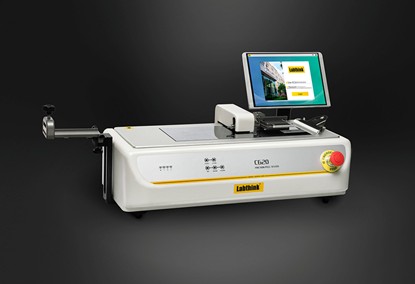
The Complex Frictional Demands of the VFFS Process
The VFFS machine subjects the film to a continuous sequence of high-speed interactions, each requiring a specific level of friction for success. These demands create an intrinsic conflict that must be resolved through precise material engineering.
The Outer COF: Friction Against Metal (Film-to-Machine)
The outer surface of the film interacts primarily with the stainless steel of the machine, specifically the forming collar and the drive mechanisms (pull belts or jaws). The requirements here are paradoxical:
Requirement for Low COF (Glide): The film must possess a low kinetic COF to glide smoothly and quickly over the large surface area of the forming collar without dragging or wrinkling. High friction here causes excessive web tension, stretching the film and leading to inaccurate bag length and misaligned graphics.
Requirement for High COF (Grip): Concurrently, the film must have sufficient friction to be gripped securely by the pull belts or jaws. Insufficient outer COF causes slippage between the film and the drive system, resulting in poor registration, inconsistent bag cut-off, and low throughput.
The successful outer COF for VFFS operation is typically found in the narrow window of 0.25 to 0.40 (tested against metal). Operating outside this range compromises either the glide or the grip functionality.
The Inner COF: Friction Against Itself (Film-to-Film)
The inner surface of the film interacts with itself as the film is folded around the forming tube and, crucially, as the pull belts drive the outer film layer downward.
Requirement: Very Low COF for Sliding: As the outer layer is pulled, the inner layer must slide effortlessly against the stationary forming tube. A high inner COF , causes resistance greater than the force applied by the pull belts. This leads to the film bunching, increased localized tension, and ultimately, pull-belt slippage and registration errors.
Defining the Ideal Operating Range: The COF Differential
The true measure of VFFS compatibility is not the absolute COF of either surface, but the COF differential between them. This differential ensures that the pulling force exerted on the outer layer is always greater than the resistance encountered by the inner layer.
For stable, high-speed VFFS operation, the outer COF should be higher than the inner COF. For instance, an outer COF of 0.38 and an inner COF of 0.25 is desirable. This differential ensures reliable traction and smooth feeding, maximizing the machine's possible cycles per minute (CPM). If the two COF values are too close, minor fluctuations in temperature or humidity could invert the relationship, leading to immediate feeding problems and product inconsistency.
While the kinetic COF dictates running efficiency, the static COF governs the critical start-up phase. If the outer static COF is excessively high , the initial force required to overcome inertia can spike the web tension, causing the film to stretch or break before steady state is achieved. Ideally, the difference between static friction coefficient should be minimal, indicating a uniform bond that is easily broken.
Labthink’s Solution: The C620H Coefficient of Friction Tester
Maintaining this critical, narrow COF range requires a precise and highly repeatable measurement platform. Our C620H Coefficient of Friction Tester is the essential coefficient of friction test equipment for qualifying flexible packaging films for VFFS compatibility, strictly adhering to standards like ASTM D1894.
C620H Specifications for Precision VFFS Testing
The C620H is engineered to deliver the detailed, high precision data required to manage VFFS film specifications:
High Precision Load Cell: The instrument is built with a high-resolution load cell with an accuracy of 0.5% FS, capable of distinguishing minute force differences between the inner and outer surfaces of a thin film.
Multi-Function Testing: The instrument's design allows for multi-function measurement of both film-to-film and film-to-metal COF in compliance with standards, using a fixed weight sled and a stable test plane. This facilitates a complete, comparative COF profile in a single instrument.
High Repeatability and Long Lifespan: Constructed with high quality components and a rigid mechanical frame, the C620H maintains its calibration and stability over a long lifespan, ensuring the test results are reliable enough to use for setting film supplier specifications and process limits.
Data Visualization: The system provides real-time force-displacement curves, enabling experienced users to identify undesirable "stick-slip" behavior or erratic friction, which often indicate poor slip additive distribution or coating inconsistency on the film.
Leveraging Accurate Data for VFFS Process Control
Using the Labthink coefficient of friction tester, packaging professionals gain tangible, actionable benefits for their high-speed VFFS lines:
Validation of Slip Agents: Accurately quantify the efficacy and stability of slip agents over time and against environmental factors, ensuring the film's high quality is consistent throughout the roll.
Customizable Parameters: The instrument offers customizable test speeds and sled weights, allowing users to closely simulate the specific pressure and velocity conditions of their unique VFFS machinery, thereby maximizing the relevance of the test data.
Conclusion
By utilizing this precise Labthink technology, our clients ensure their films are always operating within the optimal friction range, maximizing VFFS efficiency and product consistency.