
In the high-stakes world of food, pharmaceutical, and medical device packaging, precision is not a luxury—it is a foundational requirement. For experienced laboratory managers, quality control directors, and R&D professionals, the key to ensuring product safety, efficacy, and shelf stability is non-negotiable adherence to international best practices. This is the global mandate for rigorous ISO packaging test procedures.
At Labthink, we understand that adhering to the International Organization for Standardization (ISO) provides the critical framework that validates the performance and quality of packaging materials worldwide. For our clients specializing in sophisticated flexible packaging, aligning with these standards is not merely a compliance issue; itis a strategic business decision that affirms consistency, reliability, and market credibility.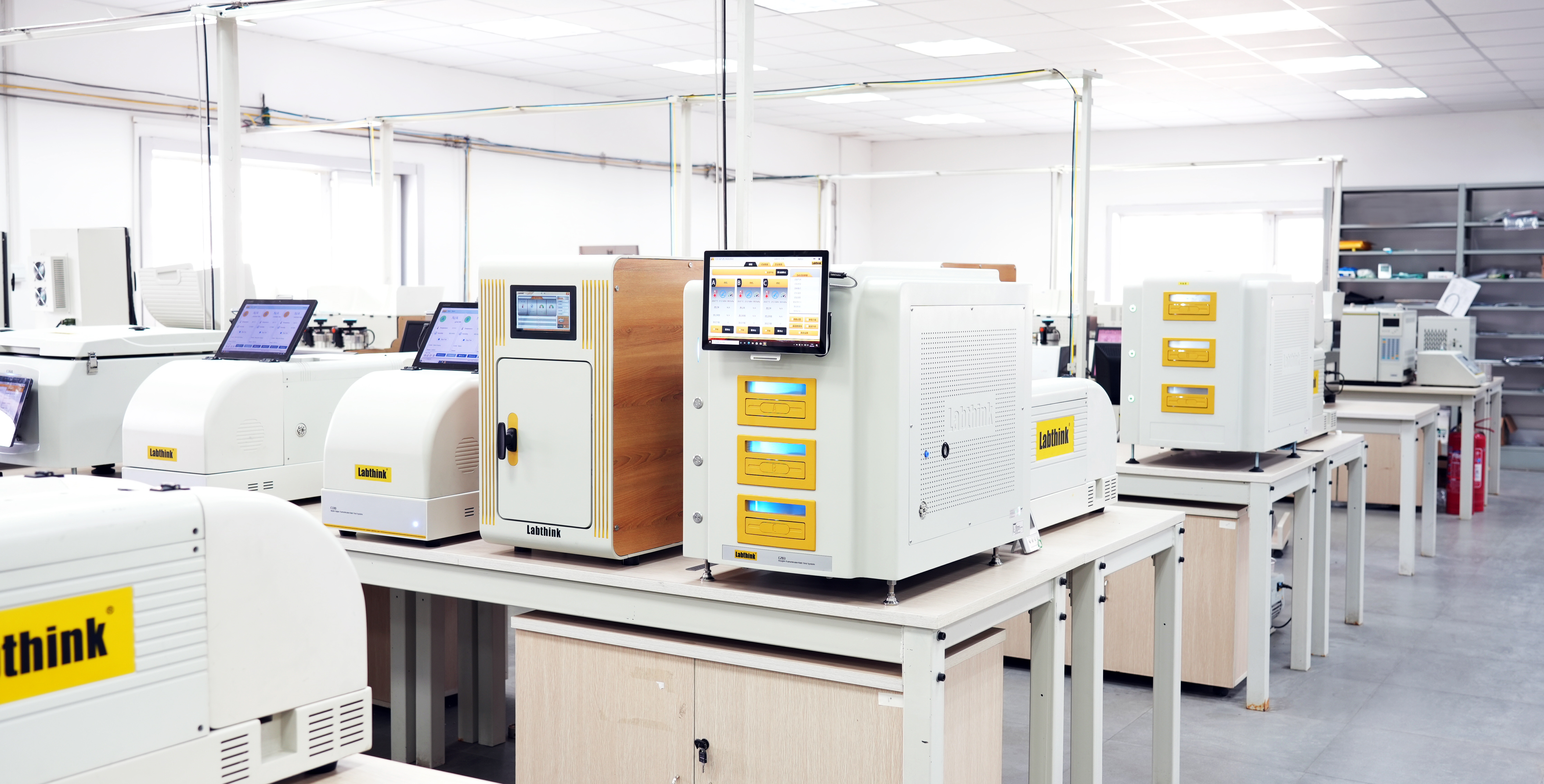
1.Understandingthe Crux of Quality: Consistency in Packaging Material Testing
Flexible materials, such as films, foils, and specialized laminates, are complex structures designed to act as highly effective barriers. Their performance is directly linked to product lifespan and consumer safety. However, the true barrier properties of these materials can only be proven through standardized, reproducible testing.
This is precisely where international standards for packaging material testing provide indispensable value. They eliminate the ambiguity of proprietary or localized testing methods, establishing a common technical language that is recognized across borders. By specifying exact test conditions—including temperature, humidity, and atmospheric pressure—these standards ensure that a test result achieved in one laboratory is technically equivalent and comparable to a result achieved anywhere else in the world.
For the experienced professional, this universal validation ensures the integrity of the supply chain, accelerates material qualification processes, and provides a robust, defensible data set for regulatory submissions, such as those governed by GMP (Good Manufacturing Practice) or FDA(Food and Drug Administration) requirements. We ensure our instrumentation helps our clients achieve this universal validation effortlessly.
2.Key Barrier Parameters: Standardization in Permeability Testing
The effectiveness of flexible packaging hinges on its barrier properties—specifically, how well it restricts the movement of gases and vapors that can compromise the enclosed product. International standards provide the authoritative procedures for measuring these critical parameters. Our instruments are engineered to meet these internationally established protocols across a range of applications.
3.Measuring Water Vapor Transmission Rate (WVTR) with High Precision
Water vapor is a major culprit in product degradation, causing everything from caking and moisture absorption in powders to loss of freshness in food. The Water Vapor Transmissibility Rate (WVTR) measures the amount of water vapor that passes through a defined area of material over a set period, following internationally recognized standards for water vapor testing. Adherence to these standards is essential for materials used in pharmaceuticals, dry foods, and electronics where minimal moisture ingress is vital.
Our Labthink Water Vapor Transmissibility Rate Tester (WVTR)utilizes precise sensors, such as the infrared sensor technique, a measurement method recognized by major global standards. These instruments are designed to handle a wide range of barrier properties. We build our equipment for high precision and controlled environment management to ensure that the final WVTR data meets the stringent high repeatability demands of global quality systems. Furthermore, our systems are designed with multi-function capabilities, allowing us to perform high-throughput testing across various flexible film types.
4. Ensuring Safety with Oxygen Transmission Rate (OTR) Testing
Oxygen ingress can lead to oxidation, rancidity in fats, color changes, and overall spoilage, especially in oxygen-sensitive products. The Oxygen Transmission Rate (OTR) quantifies the amount of oxygen gas that permeates a material according to internationally established standards for oxygen transmission rate measurement. This testing is critical for Modified Atmosphere Packaging (MAP), perishable foods, and certain medical devices that require an anoxic environment.
Our Labthink Oxygen Transmission Rate Tester (OTR) is designed around the coulometric sensor method—an industry-recognized equal pressure testing method. Our specifications allow us to test materials from moderate to high-barrier flexible films with a high degree of sensitivity. The system’s ability to test multiple specimens simultaneously under rigorously controlled conditions provides high quality, validated data efficiently. We pride ourselves on the internal engineering that provides a long lifespan for critical sensor components, minimizing operational interruptions for our expert clients.
5. Analyzing Complex Barriers Using Gas Permeability Tester
Beyond oxygen, our clients often need to analyze the barrier performance against other gases, such as nitrogen, carbon dioxide, or specialty gases. Gas Transmission Rate (GTR) testing, which adheres to internationally recognized differential pressure testing methods, is essential for ensuring product stability in scenarios involving complex gas mixtures or when evaluating specialized gas barrier films.
The Labthink Gas Permeability Testers operate on the differential pressure method specified in key international standards. We have engineered this instrument for multi-function application, and can also calculate the diffusion and solubility coefficients alongside the transmission rate. Its precision is supported by a wide, well-controlled temperature range and the ability to achieve extremely low vacuum degrees, ensuring highly accurate measurements even for high-barrier flexible films. The system's robustness ensures the data collected maintains its integrity and high repeatability throughout the process.
6.Labthink’sCommitment to high ISO Packaging Test Compliance
We know the experienced client understands that test instruments are not interchangeable; the quality of the data is directly proportional to the quality and long lifespan of the instrument itself. At Labthink, we are acutely focused on the requirements of professional users in the flexible packaging industry, offering specialized solutions that are designed for the laboratory environment.
Our commitment goes beyond standard compliance:
Customization and Flexibility: While our core instruments adhere to strict international parameters, Labthink offers customizable options for non-standard specimen sizes, unique testing materials, or specific environmental conditions, recognizing that R&D and quality control often require testing beyond routine specifications.
Advanced Features for Data Integrity: Features like integrated test blocks, automatic control of temperature, humidity, and flow rate, and optional DataShield? systems reflect our commitment to data security and process control, which are vital components of any auditable quality management system.
Precision and Reliability: The foundation of our equipment, from the specialized sensors to the sophisticated pneumatic control systems, is engineered for resilience and to deliver consistent, high precision measurements over time. This approach minimizes calibration downtime and maximizes the return on investment for high-throughput laboratory operations.
Conclusion
In the global market, the pursuit of high quality is defined by universally accepted standards. For the flexible packaging professional, utilizing instrumentation aligned with these standards for packagingmaterial testing is not just best practice—itis the proven route to product integrity and market success.