
For food manufacturers, the "shelf-life equation"is a high-stakes balancing act. While consumers judge a product by its first bite—the snap of a potato chip or the aroma of fresh coffee—the real battle is fought at the molecular level.
Choosing the wrong barrier properties isn't just a technical oversight; it’s a business liability. When the molecular shield fails, the results are predictable: oxidation, sogginess, and massive financial losses due to recalls and brand erosion. To win the battle for freshness, one must master the science of barrier and permeability testing.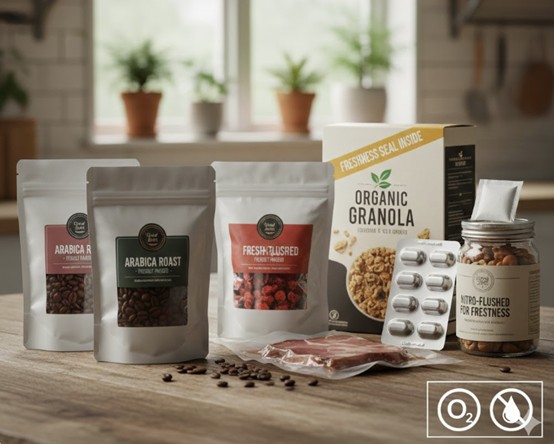
Defining Spoilage
Food spoilage isn't an accident; it's a breach of security. Every product has a "critical limit"—a specific point where oxygen or moisture ingress renders the food unpalatable or unsafe.
The "Enemies" of Freshness
- Oxygen (OTR - Oxygen Transmission Rate): Oxygen is the primary driver of oxidation. It turns fats and oils rancid, causes vibrant meats to turn gray, and destroys essential vitamins.
- Moisture (WVTR - Water Vapor Transmission Rate): This is a dual-threat. For crisp snacks or powders, moisture gain leads to sogginess and clumping. For baked goods or deli meats, moisture loss leads to dehydration and "staling."
The Standards of Measurement
To ensure consistency, the industry relies on rigorous international standards. These aren't just suggestions; they are the language of global quality control.
Key Global Standards
- OTR Testing: Primarily governed by ASTM D3985 (utilizing Coulometric sensors) and ASTM F1307 for finished packages.
- WVTR Testing: Defined by ASTM F1249 and ISO 15106, which focus on infrared sensor technology to detect minute water vapor migration.
The "Real-World" Variable: Temperature &Humidity
A common debate in production forums is: "Why did my lab results change when I moved production?" The answer is simple: Barrier properties are not static. OTR and WVTR are highly sensitive to environmental fluctuations. A film that performs perfectly at 23C may fail spectacularly at 38C in a humid climate. Testing sometimes has to be conducted at "Real-World"conditions—simulating the actual supply chain—rather than relying solely on"ideal" laboratory settings.
Critical Questions in Barrier Validation
1. Can I rely on the film supplier's data sheet?
No. Supplier data usually reflects "flat film"performance in a controlled environment. However, the process of converting that film into a bag—including creases, heat seals, and thermoforming can degrade the barrier performance. You need to test the finished package, not just the raw material.
2. The Sustainability Hurdle
The industry is shifting from complex multi-layer laminates to eco-friendly mono-materials or paper-based coatings. While better for the planet, these materials often struggle to match the "total block"performance of traditional plastics. Validating these new materials requires even more precise testing to ensure shelf life isn't sacrificed for sustainability.
3. Precision Tools:
To manage these variables, manufacturers utilize high-precision instruments like Labthink C406H Oxygen /Water Vapor Transmission Rate Test System. Its advanced sensors can detect the minute oxygen and moisture traces required to validate long-term stability, ensuring that even the most sensitive products remain protected over months of storage.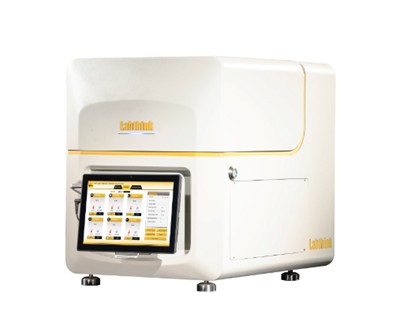
Conclusion
In the world of food manufacturing, your packaging is your product’s last line of defense. Understanding the nuances of OTR and WVTR isn’t just about compliance—it's about protecting your bottom line and your brand’s reputation.
Labthink provides the world’s leading manufacturers with the precision instruments needed to validate these critical barriers, ensuring that the "shelf-life equation" always results in a fresh product for the consumer.